-
Shop
- Advanced Technologies
- AI Skills Mastery 2026 Collection
- Apple Accessories
- Arts, Crafts & Hobbies
- Best-Sellers
- Calvin Klein
- Car Accessories
- Christmas Collection
- Dating & Social Skills
- Denim
- 7FOR
- AGOLDE
- Antony Morato
- Armani Exchange
- Boss
- Brunello Cucinelli
- Calvin Klein Jeans
- Costume National
- Desigual
- Diesel
- Dolce & Gabbana
- Dsquared²
- Ermanno Scervino
- Fendi
- Gianni Lupo
- Guess Jeans
- Ichi
- Just Cavalli
- Lee
- Levi's
- Liu Jo
- Morgan De Toi
- Mother Denim
- Only
- Pepe Jeans
- Pinko
- Replay
- Tommy Hilfiger Jeans
- Valentino
- Vero Moda
- Digital Resources
- Car Buying & Ownership
- Cozy Feast Collection
- Emotional Intelligence
- Financial Education
- Home Styling & Organization
- Mindfulness
- Mindset
- Parenting & Child Development
- Pet Lifestyle & Wellness
- Positive Thinking
- Productivity
- Self Confidence
- Sleep Improvement
- Stress Management & Relaxation
- Travel Planning
- Yoga & Fitness
- Yoga & Mind-Body Practices
- Education & Learning
- Family & Parenting
- Fashion
- Accessories
- Alexander McQueen
- Bags
- Bags & Wallets
- Balenciaga
- Belts
- Blazers
- Blouses & Shirts
- Bottega Veneta
- Bottoms
- Brunello Cucinelli
- Burberry
- Chanel
- Chloé
- Dior
- Dolce & Gabbana
- Dresses
- Etro
- Gucci
- Hats & Hair Accessories
- Hoodies & Sweatshirts
- Jacquemus
- Jewelry
- Jil Sander
- Jimmy Choo
- Kiton
- Luggage
- Luggage Bags
- Men's Fashion
- Miu Miu
- Off-White
- Outerwear
- Prada
- Rick Owens
- Saint Laurent
- Skirts
- Socks & Tights
- Sunglasses
- Sweaters & Cardigans
- The Row
- Tom Ford
- Tops & Shirts
- Valentino Garavani
- Versace
- Vivienne Westwood
- Watches
- Fashion Accessories
- Furniture
- Gadgets
- Health & Beauty
- Health & Wellness
- Home & Garden
- Home Supplies
- Kids & Babies
- Lighting
- Patio, Lawn & Garden
- Personal Growth
- Pet Care
- Pet Supplies
- Pets
- Shoes
- Sport & Outdoors
- Super Deals
- Thanksgiving Digital Collection
- AI & Tech-Enhanced Thanksgiving
- Budgeting & Smart Shopping
- Eco-Friendly & Sustainable Thanksgiving
- Family & Kids
- Gift Ideas Guides
- Gratitude & Mindfulness
- History & Meaning
- Hosting & Planning
- Leftovers & Storage
- Pets & Thanksgiving
- Social Media Captions & Ideas
- Thanksgiving DIY Ideas
- Thanksgiving Recipes
- Thanksgiving Products
- Travel
- Wealth
- Wealth Building
- Budgeting & Saving
- Cryptocurrency Investing
- Debt Management
- Entrepreneurship & Business Growth
- Family Finance & Budgeting
- Financial Independence
- Financial Mindset & Psychology
- Financial Planning
- Frugal Living & Expense Hacks
- Goal Setting
- High-Income Skills
- Investing Basics
- Leadership
- Motivation
- Networking & Mentorship
- Passive Income Strategies
- Real Estate Investing
- Side Hustles
- Stock Market Investing
- YouTube Shorts Best-Sellers
Smart AI Emotional Robot Companion: Kids & Adults Guide
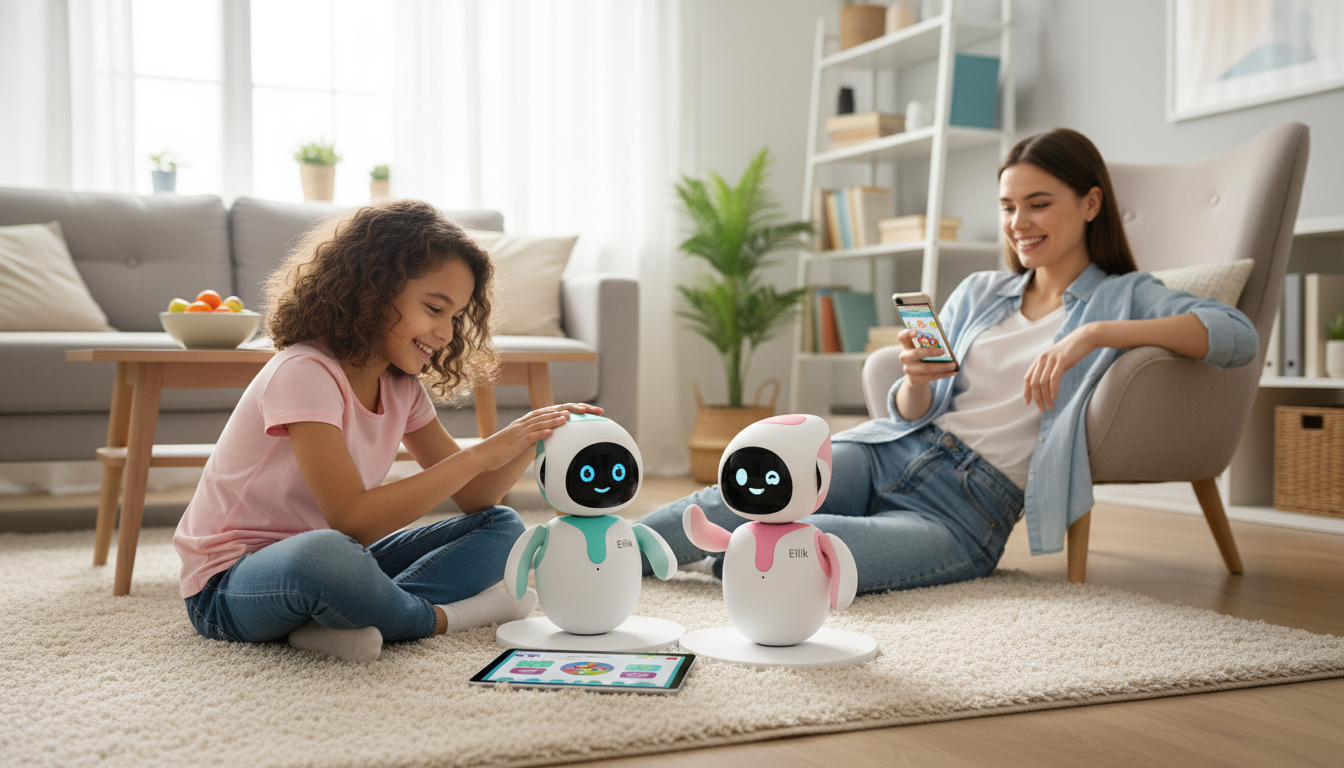
A smart emotional robot companion can add conversation, routines, and playful interaction to everyday life—whether it’s a child practicing social skills or an adult looking for a calming desk buddy. This guide breaks down what this companion robot is designed to do, who it suits best, and the practical details that matter most: safety, privacy, daily use, and long-term value.
What This Robot Companion Is Made For
The Smart AI Interactive Emotional Robot Companion for Kids and Adults is built around “presence”—the feeling that something nearby can respond to you in a lively, friendly way. Instead of being a passive toy or a basic speaker, it’s meant to participate in quick back-and-forth moments throughout the day.
- Interactive companionship: designed to respond, engage, and create a sense of presence through conversational and behavioral cues.
- Emotional-style interaction: aims to mirror or react to moods using expressions, sounds, or behavior patterns (varies by environment and user interaction).
- Everyday routines: works best when used in predictable moments—morning greetings, after-school wind-down, study breaks, or evening relaxation.
- Shared use across ages: a good fit for families where both kids and adults want a playful, responsive companion in a common space.
Best-Fit Scenarios for Kids
For kids, the biggest win is often low-pressure interaction. A responsive robot can help a child practice speaking clearly, taking turns, and sticking with short routines—without feeling like they’re being “tested” by an adult.
- Practice with communication: encourages turn-taking, asking questions, and responding—especially helpful for shy kids who benefit from gentle, repeatable interaction.
- Structured play: supports imagination-based play with predictable responses that keep engagement high without constant adult direction.
- Routine support: can act like a friendly timer buddy for homework sprints, tidy-up prompts, or calming transitions.
- Family participation: works best when parents set boundaries and keep the robot in shared areas rather than bedrooms.
| Goal | How to Use It | Simple Boundary |
|---|---|---|
| Homework focus | Use during short study sprints with breaks | Turn off during tests/quiet reading |
| Calm-down time | Use after high-energy play for a reset | Avoid using as the only calming tool |
| Social practice | Role-play greetings, questions, and manners | Parents stay nearby for younger kids |
Best-Fit Scenarios for Adults
Adults tend to enjoy this type of companion robot in short bursts—little interactions that break up the day without becoming a distraction. Think of it as a desk-side “micro-reset” that adds a bit of personality to a routine.
For evening routines, pairing a calming wind-down habit with a simple plan can help the robot feel less like a novelty and more like part of the household flow. A helpful add-on for sleep-focused structure is the Unlock Your Body’s Natural Power to Rest with the Deep Sleep Reset eBook, which includes a checklist-style approach to consistent bedtime habits.
Core Interaction Features to Look For
| Feature | Why It Matters | What to Verify |
|---|---|---|
| Voice/touch response | Makes interaction feel natural | Clear response cues and consistent triggering |
| Emotional expressions | Creates a companion-like feel | Multiple states, not a single repeated loop |
| Personalization | Improves long-term novelty | Profiles, preferences, routine memory |
| Connectivity controls | Supports privacy choices | Ability to disable mic/camera/network where applicable |
Safety, Privacy, and Household Rules
Any interactive device that can respond to voices or behaviors deserves a quick “house rules” checklist, especially around kids. Start with the basics: what data is processed locally, what may be sent to servers, and what controls exist inside the device settings or companion app (if applicable). For families, it’s also smart to be aware of children’s privacy expectations under the FTC’s Children’s Online Privacy Protection Rule (COPPA).
For broader household media boundaries, the American Academy of Pediatrics offers a practical framework for setting expectations with kids via its Family Media Plan. If privacy planning is a priority, the NIST Privacy Framework is a helpful reference for thinking through controls and data flow.
Setup, Daily Use, and Keeping It Fun
Care, Durability, and Long-Term Value
| Task | Frequency | Tip |
|---|---|---|
| Wipe exterior | Weekly | Use microfiber cloth; no sprays directly on device |
| Check updates | Monthly | Update during downtime to avoid interruptions |
| Inspect charging cable | Monthly | Replace if frayed or loose |
| Reset/refresh routines | Every 6–8 weeks | Add new prompts or games to prevent boredom |
Product Snapshot
| Detail | Value |
|---|---|
| Product | Smart AI Interactive Emotional Robot Companion for Kids and Adults |
| Price | 377.01 USD |
| Stock status | In stock |
| Ideal for | Families, tech-forward households, desk setups, and gift-giving where interactive companionship is desired |
| Budget note | Positioned as a premium companion device; best value comes from regular use and household integration |
FAQ
Is an emotional robot companion appropriate for young children?
It can be a good fit when used in shared spaces with clear time limits and adult supervision for younger kids. The best results come when it supports routines and social practice while still prioritizing real-world play and interaction.
Does a robot companion record conversations or store personal data?
Capabilities vary by model and settings, so it’s important to review privacy controls and understand what runs offline versus connected. Keep it out of areas where sensitive conversations happen and use parental controls when children are in the home.
How can the novelty be kept from wearing off?
Keep sessions short, build repeatable routines, and rotate activities so interactions don’t feel stuck in a loop. Personalization and family participation also help it stay relevant beyond the first few weeks.
Recommended for you



Was this article helpful?
Yes
No








Leave a comment