-
Shop
- Advanced Technologies
- AI Skills Mastery 2026 Collection
- Apple Accessories
- Arts, Crafts & Hobbies
- Best-Sellers
- Calvin Klein
- Car Accessories
- Christmas Collection
- Dating & Social Skills
- Denim
- 7FOR
- AGOLDE
- Antony Morato
- Armani Exchange
- Boss
- Brunello Cucinelli
- Calvin Klein Jeans
- Costume National
- Desigual
- Diesel
- Dolce & Gabbana
- Dsquared²
- Ermanno Scervino
- Fendi
- Gianni Lupo
- Guess Jeans
- Ichi
- Just Cavalli
- Lee
- Levi's
- Liu Jo
- Morgan De Toi
- Mother Denim
- Only
- Pepe Jeans
- Pinko
- Replay
- Tommy Hilfiger Jeans
- Valentino
- Vero Moda
- Digital Resources
- Car Buying & Ownership
- Cozy Feast Collection
- Emotional Intelligence
- Financial Education
- Home Styling & Organization
- Mindfulness
- Mindset
- Parenting & Child Development
- Pet Lifestyle & Wellness
- Positive Thinking
- Productivity
- Self Confidence
- Sleep Improvement
- Stress Management & Relaxation
- Travel Planning
- Yoga & Fitness
- Yoga & Mind-Body Practices
- Education & Learning
- Family & Parenting
- Fashion
- Accessories
- Alexander McQueen
- Bags
- Bags & Wallets
- Balenciaga
- Belts
- Blazers
- Blouses & Shirts
- Bottega Veneta
- Bottoms
- Brunello Cucinelli
- Burberry
- Chanel
- Chloé
- Dior
- Dolce & Gabbana
- Dresses
- Etro
- Gucci
- Hats & Hair Accessories
- Hoodies & Sweatshirts
- Jacquemus
- Jewelry
- Jil Sander
- Jimmy Choo
- Kiton
- Luggage
- Luggage Bags
- Men's Fashion
- Miu Miu
- Off-White
- Outerwear
- Prada
- Rick Owens
- Saint Laurent
- Skirts
- Socks & Tights
- Sunglasses
- Sweaters & Cardigans
- The Row
- Tom Ford
- Tops & Shirts
- Valentino Garavani
- Versace
- Vivienne Westwood
- Watches
- Fashion Accessories
- Furniture
- Gadgets
- Health & Beauty
- Health & Wellness
- Home & Garden
- Home Supplies
- Kids & Babies
- Lighting
- Patio, Lawn & Garden
- Personal Growth
- Pet Care
- Pet Supplies
- Pets
- Shoes
- Sport & Outdoors
- Super Deals
- Thanksgiving Digital Collection
- AI & Tech-Enhanced Thanksgiving
- Budgeting & Smart Shopping
- Eco-Friendly & Sustainable Thanksgiving
- Family & Kids
- Gift Ideas Guides
- Gratitude & Mindfulness
- History & Meaning
- Hosting & Planning
- Leftovers & Storage
- Pets & Thanksgiving
- Social Media Captions & Ideas
- Thanksgiving DIY Ideas
- Thanksgiving Recipes
- Thanksgiving Products
- Travel
- Wealth
- Wealth Building
- Budgeting & Saving
- Cryptocurrency Investing
- Debt Management
- Entrepreneurship & Business Growth
- Family Finance & Budgeting
- Financial Independence
- Financial Mindset & Psychology
- Financial Planning
- Frugal Living & Expense Hacks
- Goal Setting
- High-Income Skills
- Investing Basics
- Leadership
- Motivation
- Networking & Mentorship
- Passive Income Strategies
- Real Estate Investing
- Side Hustles
- Stock Market Investing
- YouTube Shorts Best-Sellers
Kitchen Island Cart with Storage & Wine Rack for Small Spaces
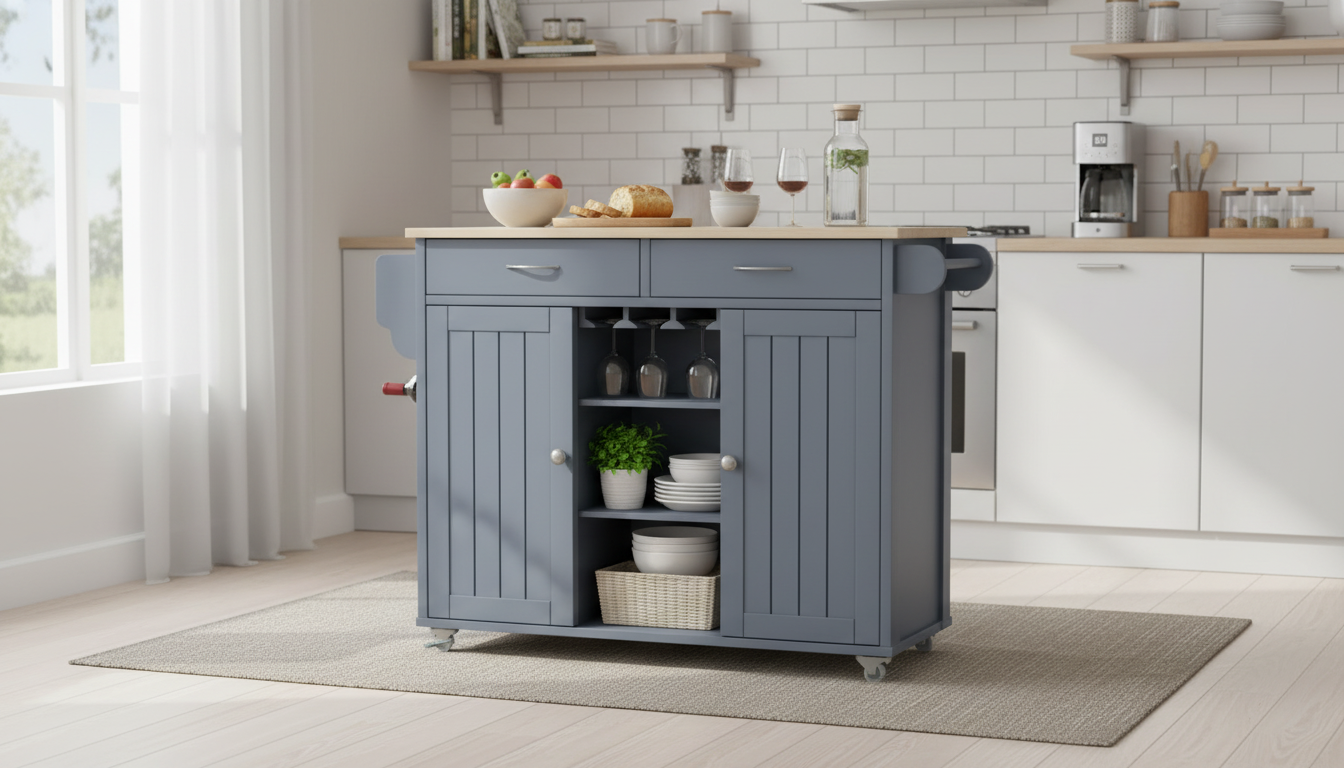
Multi-Purpose Kitchen Island Cart with Storage and Wine Rack: A Flexible Prep, Serve, and Store Station
A kitchen cart can add workspace, reduce countertop clutter, and keep everyday items within reach—without a permanent remodel. This multi-purpose kitchen island cart combines prep surface, enclosed storage, open shelving, and a built-in wine rack to support cooking, entertaining, and daily organization in compact or busy kitchens.
What This Cart Adds to a Kitchen
- Extra work surface for chopping, mixing, plating, or setting up a coffee/bar station when counters are already spoken for.
- A home for small appliances and cookware to free up cabinets and counters and make daily tools easier to grab.
- Dedicated wine storage that keeps bottles organized, protected from rolling, and ready for weeknight dinners or guests.
- A movable station that can shift between cooking zone, dining area, and pantry overflow depending on the moment.
Storage Layout and How to Use Each Zone
The most useful carts feel “assigned” even when they stay flexible. Think of the cart as four zones—top, cabinet, open shelves, and rack—then stock each zone with items that match how you actually cook and host.
- Top surface: daily prep tasks, a microwave/air-fryer landing zone (verify heat/clearance and manufacturer guidance), or a serving pass-through during gatherings.
- Enclosed storage: items that look cluttered on open shelves—mixing bowls, pantry backups, cleaning supplies (keep away from food areas), or table linens.
- Open shelves: frequently used items such as plates, cookbooks, fruit baskets, or countertop appliances that benefit from airflow.
- Wine rack: reserve for wine bottles or repurpose for sparkling water bottles and reusable drink bottles if preferred.
Quick Setup Ideas by Household Need
| Need | Top Surface | Shelves/Cabinet | Wine Rack |
|---|---|---|---|
| Everyday cooking | Prep zone near stove | Pots, oils, spices, cutting boards | Wine or seltzer bottles |
| Entertaining | Appetizer + drink station | Plates, napkins, serving trays | Wine bottles ready to pour |
| Small kitchen | Appliance landing spot | Pantry overflow, bowls, mugs | Non-alcoholic bottles |
| Coffee bar | Coffee maker + mugs | Pods/beans, syrups, filters | Creamers or bottled drinks |
Space Planning: Where a Cart Works Best
A cart earns its keep when it fits your movement patterns. Before committing to a “parking spot,” measure both the footprint and how the area functions when you’re carrying groceries, unloading the dishwasher, or opening an oven door.
- Measure the intended parking spot and travel path; ensure doors, drawers, and appliances can open without collision.
- Allow comfortable walking clearance around the cart; tighter kitchens benefit from placing it against a wall when not in use.
- Position near outlets if it will support appliances; use cord management to avoid tripping and to keep cords away from sink splash.
- Keep it out of high-heat splash zones unless the surface and finish are suitable for that placement.
If the cart will serve as a daily prep station, place it where you naturally do “repetitive” steps: rinsing produce near the sink, chopping near a trash can, or plating near the pass-through to the dining space. A few inches of smart placement can save a surprising amount of back-and-forth.
Wine Rack Considerations for Everyday Use
A built-in wine rack is practical even for casual households, because it turns rolling bottles into stable, visible storage. A few small choices help the rack stay convenient instead of fussy.
Care, Cleaning, and Long-Term Organization
Kitchen carts get touched constantly—raw ingredients, hot plates, sticky cups—so simple routines matter. For food-contact surfaces, follow common food-safety habits such as cleaning and sanitizing prep areas, especially after handling raw meat or poultry (see USDA FSIS Kitchen Companion—Clean for guidance). If you’re comparing materials for food-adjacent equipment, it can also help to understand sanitation expectations described by organizations like NSF’s overview of food equipment standards.
Product Spotlight: Multi-Purpose Kitchen Island Cart with Storage and Wine Rack
If the goal is one piece that can prep, store, and serve without taking over the kitchen, the Multi-Purpose Kitchen Island Cart with Storage and Wine Rack is built for that balancing act. It combines a usable top surface with both open and enclosed storage, so everyday essentials can stay accessible while visual clutter stays tucked away.
Other In-Stock Picks to Support an Organized Home
- Wireless WiFi 4G Home Alarm System with Touchscreen and Long-Life Sensors (helpful for households that want an added layer of protection while hosting or traveling).
- Unlock Your Body’s Natural Power to Rest with the Deep Sleep Reset | eBook to Increase Deep Sleep Naturally | Sleep Hygiene Guide & Checklist (a digital guide for building more consistent routines).
FAQ
How much space is needed around a kitchen island cart?
Measure the cart’s footprint plus any door/drawer swing, then confirm there’s comfortable walking clearance on the main traffic side. In tight kitchens, it often works best parked against a wall and pulled out only when needed.
Can the wine rack be used for drinks other than wine?
Yes—many households use the slots for sparkling water, soda, or reusable bottles, as long as the slot size and weight distribution make the cart feel stable. It can also hold rolled towels or similarly sized items if you prefer non-bottle storage.
What should be stored on the lower shelves versus the top?
Keep heavier items (small appliances, bulk pantry items, stacks of plates) on lower shelves for stability and easier lifting. Store lighter, frequently used items higher, and keep cleaning chemicals separated from food and food-contact tools.
Recommended for you


Was this article helpful?
Yes
No








Leave a comment