-
Shop
- Advanced Technologies
- AI Skills Mastery 2026 Collection
- Apple Accessories
- Arts, Crafts & Hobbies
- Best-Sellers
- Calvin Klein
- Car Accessories
- Christmas Collection
- Dating & Social Skills
- Denim
- 7FOR
- AGOLDE
- Antony Morato
- Armani Exchange
- Boss
- Brunello Cucinelli
- Calvin Klein Jeans
- Costume National
- Desigual
- Diesel
- Dolce & Gabbana
- Dsquared²
- Ermanno Scervino
- Fendi
- Gianni Lupo
- Guess Jeans
- Ichi
- Just Cavalli
- Lee
- Levi's
- Liu Jo
- Morgan De Toi
- Mother Denim
- Only
- Pepe Jeans
- Pinko
- Replay
- Tommy Hilfiger Jeans
- Valentino
- Vero Moda
- Digital Resources
- Car Buying & Ownership
- Cozy Feast Collection
- Emotional Intelligence
- Financial Education
- Home Styling & Organization
- Mindfulness
- Mindset
- Parenting & Child Development
- Pet Lifestyle & Wellness
- Positive Thinking
- Productivity
- Self Confidence
- Sleep Improvement
- Stress Management & Relaxation
- Travel Planning
- Yoga & Fitness
- Yoga & Mind-Body Practices
- Education & Learning
- Family & Parenting
- Fashion
- Accessories
- Alexander McQueen
- Bags
- Bags & Wallets
- Balenciaga
- Belts
- Blazers
- Blouses & Shirts
- Bottega Veneta
- Bottoms
- Brunello Cucinelli
- Burberry
- Chanel
- Chloé
- Dior
- Dolce & Gabbana
- Dresses
- Etro
- Gucci
- Hats & Hair Accessories
- Hoodies & Sweatshirts
- Jacquemus
- Jewelry
- Jil Sander
- Jimmy Choo
- Kiton
- Luggage
- Luggage Bags
- Men's Fashion
- Miu Miu
- Off-White
- Outerwear
- Prada
- Rick Owens
- Saint Laurent
- Skirts
- Socks & Tights
- Sunglasses
- Sweaters & Cardigans
- The Row
- Tom Ford
- Tops & Shirts
- Valentino Garavani
- Versace
- Vivienne Westwood
- Watches
- Fashion Accessories
- Furniture
- Gadgets
- Health & Beauty
- Health & Wellness
- Home & Garden
- Home Supplies
- Kids & Babies
- Lighting
- Patio, Lawn & Garden
- Personal Growth
- Pet Care
- Pet Supplies
- Pets
- Shoes
- Sport & Outdoors
- Super Deals
- Thanksgiving Digital Collection
- AI & Tech-Enhanced Thanksgiving
- Budgeting & Smart Shopping
- Eco-Friendly & Sustainable Thanksgiving
- Family & Kids
- Gift Ideas Guides
- Gratitude & Mindfulness
- History & Meaning
- Hosting & Planning
- Leftovers & Storage
- Pets & Thanksgiving
- Social Media Captions & Ideas
- Thanksgiving DIY Ideas
- Thanksgiving Recipes
- Thanksgiving Products
- Travel
- Wealth
- Wealth Building
- Budgeting & Saving
- Cryptocurrency Investing
- Debt Management
- Entrepreneurship & Business Growth
- Family Finance & Budgeting
- Financial Independence
- Financial Mindset & Psychology
- Financial Planning
- Frugal Living & Expense Hacks
- Goal Setting
- High-Income Skills
- Investing Basics
- Leadership
- Motivation
- Networking & Mentorship
- Passive Income Strategies
- Real Estate Investing
- Side Hustles
- Stock Market Investing
- YouTube Shorts Best-Sellers
Dog Anxiety Signs & Calm Training: Triggers, Thresholds
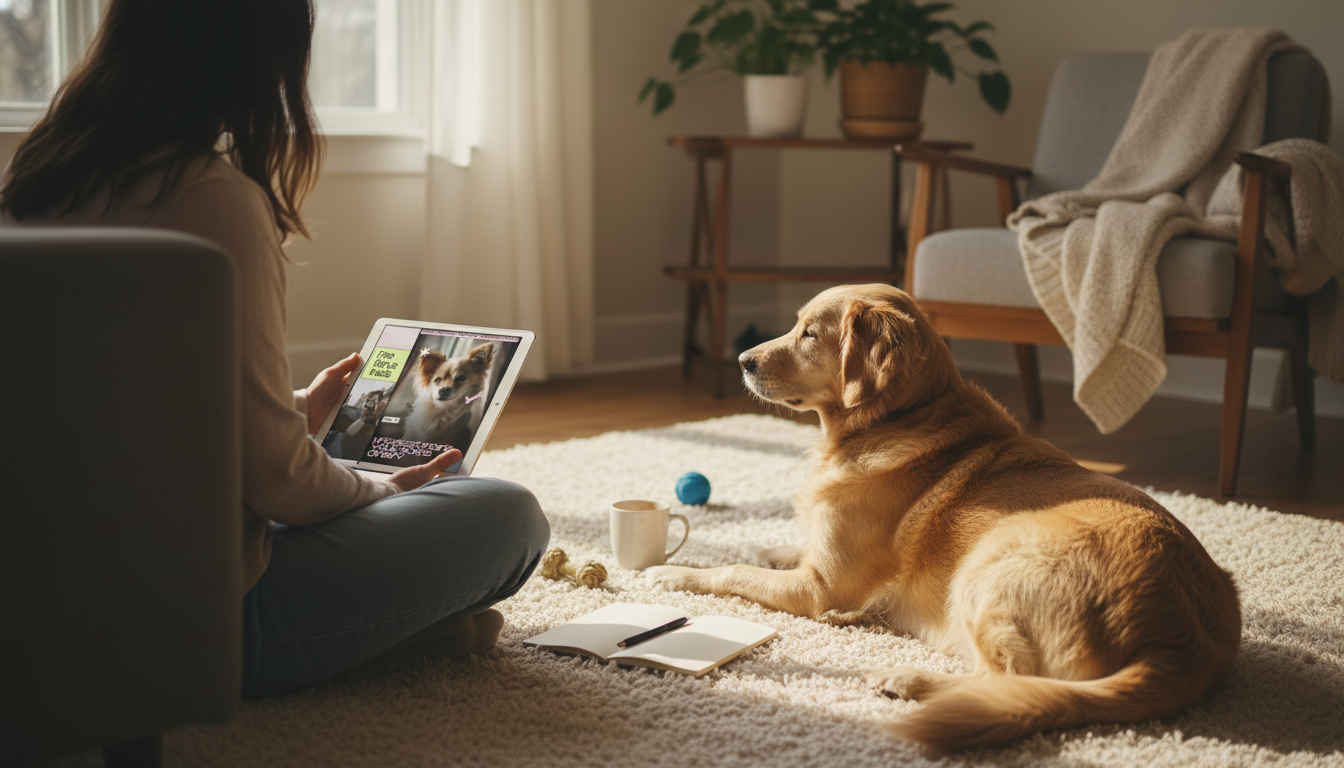
Understanding Your Dog’s Anxiety: Stress Signals, Behavior Patterns, and Calm Training Strategies
Dog anxiety often shows up as small, easy-to-miss stress signals long before it turns into pacing, barking, destruction, or shutting down. Learning to spot early signs, identify triggers, and respond with calming routines and training strategies helps reduce fear and build confidence. The goal isn’t to “stop behaviors” as much as it is to change how your dog feels in situations that currently feel unsafe.
What Anxiety Looks Like in Dogs (Beyond “Bad Behavior”)
Anxiety is a sustained state of worry or fear. It can affect sleep, appetite, digestion, learning, and social behavior—especially when a dog repeatedly faces triggers they can’t predict or control. Many dogs try to communicate discomfort early, but those signals are subtle and easy to miss.
Common early stress signals include lip licking, yawning when not tired, “whale eye” (showing the whites of the eyes), sudden sniffing, freezing, shaking off, turning away, or a tucked tail. These are often attempts to self-soothe or create distance, not signs of stubbornness.
Punishment usually backfires because it increases fear and can suppress warning signals (like growling) without resolving the underlying emotion. A dog that stops warning may skip straight to a bigger reaction next time.
Anxiety can look similar to excitement, but context and recovery time matter. Excited dogs typically bounce back quickly and can disengage and settle. Anxious dogs tend to stay “stuck,” escalating or struggling to recover even after the trigger is gone.
Common Triggers and Types of Canine Anxiety
Many dogs experience more than one type of anxiety, and triggers can shift over time. The most common categories include:
- Separation-related anxiety: distress when left alone, often seen as vocalizing, escape attempts, drooling, pacing, or house-soiling.
- Noise sensitivities: fireworks, thunder, construction, alarms, or even household appliances. Without support, these fears can generalize and grow.
- Social anxiety or fear of strangers/dogs: avoidance, hiding, barking/lunging, or refusal to move.
- Handling and veterinary-related fear: stiff posture, head turning away, lip licking, growling, or snapping—often worsened by forced restraint.
- Change-related stress: moving, new schedules, new pets, or family changes, commonly showing up as clinginess, restlessness, or reduced appetite.
- Medical contributors: pain, GI discomfort, cognitive changes, thyroid issues, or sensory decline can mimic or amplify anxiety. A veterinary check is important when anxiety appears suddenly or escalates quickly.
Stress signals and what to do in the moment
| Stress signal | What it can mean | Calm response to try |
|---|---|---|
| Lip licking, yawning (when not tired) | Rising discomfort; attempting to self-soothe | Increase distance from the trigger; lower expectations; offer a simple cue your dog knows well |
| Whale eye, tucked tail, crouching | Fear; feeling trapped | Create an escape route; stop approaching; use a gentle food scatter to shift focus |
| Freezing, refusing to move | Over threshold; unsure what to do | Pause; reduce intensity; turn and walk away calmly; reward any small re-engagement |
| Panting, pacing, trembling (not hot) | Heightened arousal; panic building | Move to a quiet space; dim lights; offer a chew/lick option; avoid crowding your dog |
| Barking/lunging on leash | Distance-increasing behavior; fear/frustration | Increase distance; use U-turns; reinforce calm check-ins; avoid tight leash pressure |
| Destructive behavior when alone | Separation distress; coping attempt | Implement a gradual alone-time plan; add enrichment; consider professional support |
Finding Patterns: A Simple Trigger-and-Threshold Check
Progress gets faster when patterns become clear. A quick way to do this is tracking the “ABC”:
- Antecedent: what happened right before (doorbell, leash clipped, neighbor dog appears).
- Behavior: what your dog did (froze, barked, bolted, hid).
- Consequence: what changed afterward (trigger went away, you picked them up, you left the area).
Next, identify threshold signs—the point where your dog can’t take food, can’t respond to familiar cues, or escalates rapidly. Staying under threshold is the foundation of effective training.
Also watch for stress stacking: multiple stressors in one day (busy walk + visitors + loud noises) can lower resilience. Building a baseline routine with predictable meals, walks, rest, and decompression time often reduces “background stress” so triggers are easier to handle.
Calm Training Foundations (What to Teach When the Dog Is Not Upset)
Training works best when your dog is already calm. That’s when the brain is available to learn.
Situation Playbooks: What to Do in Real Life
When guests arrive
On walks
During loud noises
When left alone
Helpful Resources for Your Plan
- Understanding Your Dog’s Anxiety – Digital Guide to Canine Anxiety, Stress Signals, Behavior, and Calm Training Strategies (digital walkthrough with practical routines and examples)
- Mini HD 720P WiFi Camera (a simple way to monitor alone-time patterns and confirm whether your dog settles or escalates)
For additional evidence-informed guidance, see the American Veterinary Society of Animal Behavior (AVSAB) position statements, the Merck Veterinary Manual’s behavior resources, and the ASPCA’s fear and anxiety articles.
When to Get Professional Help (and What It Can Look Like)
FAQ
What are the earliest signs that a dog is anxious?
Early signs are often subtle, such as lip licking, yawning when not tired, whale eye, freezing, turning away, or sudden sniffing. These signals usually appear before barking or lunging, and noticing them early helps you add distance or reduce pressure before your dog escalates.
How long does it take to reduce a dog’s anxiety with training?
It depends on severity, trigger frequency, health factors, and consistency, but meaningful improvement often takes weeks to months. Signs you’re on track include calmer reactions at greater intensity, quicker recovery after triggers, and a better ability to eat treats or follow simple cues.
Should a dog with anxiety be comforted or ignored?
Calm reassurance and helping your dog feel safe are appropriate, especially if your dog seeks you out. The key is to stay steady rather than frantic, reduce exposure to the trigger when possible, and reinforce calm behaviors instead of accidentally amplifying panic.
Recommended for you



Was this article helpful?
Yes
No








Leave a comment