-
Shop
- Advanced Technologies
- AI Skills Mastery 2026 Collection
- Apple Accessories
- Arts, Crafts & Hobbies
- Best-Sellers
- Calvin Klein
- Car Accessories
- Christmas Collection
- Dating & Social Skills
- Denim
- 7FOR
- AGOLDE
- Antony Morato
- Armani Exchange
- Boss
- Brunello Cucinelli
- Calvin Klein Jeans
- Costume National
- Desigual
- Diesel
- Dolce & Gabbana
- Dsquared²
- Ermanno Scervino
- Fendi
- Gianni Lupo
- Guess Jeans
- Ichi
- Just Cavalli
- Lee
- Levi's
- Liu Jo
- Morgan De Toi
- Mother Denim
- Only
- Pepe Jeans
- Pinko
- Replay
- Tommy Hilfiger Jeans
- Valentino
- Vero Moda
- Digital Resources
- Car Buying & Ownership
- Cozy Feast Collection
- Emotional Intelligence
- Financial Education
- Home Styling & Organization
- Mindfulness
- Mindset
- Parenting & Child Development
- Pet Lifestyle & Wellness
- Positive Thinking
- Productivity
- Self Confidence
- Sleep Improvement
- Stress Management & Relaxation
- Travel Planning
- Yoga & Fitness
- Yoga & Mind-Body Practices
- Education & Learning
- Family & Parenting
- Fashion
- Accessories
- Alexander McQueen
- Bags
- Bags & Wallets
- Balenciaga
- Belts
- Blazers
- Blouses & Shirts
- Bottega Veneta
- Bottoms
- Brunello Cucinelli
- Burberry
- Chanel
- Chloé
- Dior
- Dolce & Gabbana
- Dresses
- Etro
- Gucci
- Hats & Hair Accessories
- Hoodies & Sweatshirts
- Jacquemus
- Jewelry
- Jil Sander
- Jimmy Choo
- Kiton
- Luggage
- Luggage Bags
- Men's Fashion
- Miu Miu
- Off-White
- Outerwear
- Prada
- Rick Owens
- Saint Laurent
- Skirts
- Socks & Tights
- Sunglasses
- Sweaters & Cardigans
- The Row
- Tom Ford
- Tops & Shirts
- Valentino Garavani
- Versace
- Vivienne Westwood
- Watches
- Fashion Accessories
- Furniture
- Gadgets
- Health & Beauty
- Health & Wellness
- Home & Garden
- Home Supplies
- Kids & Babies
- Lighting
- Patio, Lawn & Garden
- Personal Growth
- Pet Care
- Pet Supplies
- Pets
- Shoes
- Sport & Outdoors
- Super Deals
- Thanksgiving Digital Collection
- AI & Tech-Enhanced Thanksgiving
- Budgeting & Smart Shopping
- Eco-Friendly & Sustainable Thanksgiving
- Family & Kids
- Gift Ideas Guides
- Gratitude & Mindfulness
- History & Meaning
- Hosting & Planning
- Leftovers & Storage
- Pets & Thanksgiving
- Social Media Captions & Ideas
- Thanksgiving DIY Ideas
- Thanksgiving Recipes
- Thanksgiving Products
- Travel
- Wealth
- Wealth Building
- Budgeting & Saving
- Cryptocurrency Investing
- Debt Management
- Entrepreneurship & Business Growth
- Family Finance & Budgeting
- Financial Independence
- Financial Mindset & Psychology
- Financial Planning
- Frugal Living & Expense Hacks
- Goal Setting
- High-Income Skills
- Investing Basics
- Leadership
- Motivation
- Networking & Mentorship
- Passive Income Strategies
- Real Estate Investing
- Side Hustles
- Stock Market Investing
- YouTube Shorts Best-Sellers
Thanksgiving Cleanup Checklist: Fast, Calm Kitchen Reset
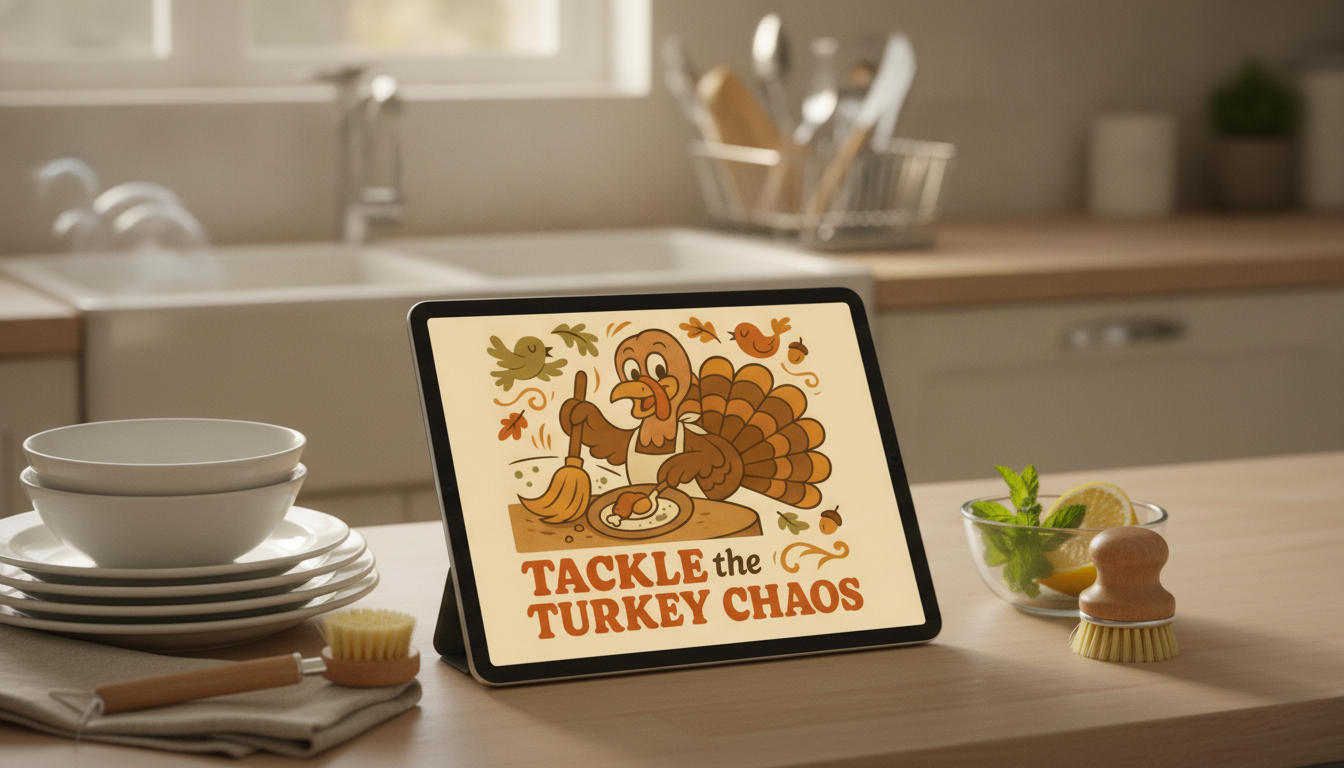
Tackle the Turkey Chaos: A Thanksgiving Cleanup Checklist for Fast, Calm Post-Dinner Reset
Thanksgiving cleanup gets easier when every task has a place, a person, and a simple order. The goal isn’t a “perfect” kitchen—it’s a functional reset that keeps food safe, prevents sink pileups, and gets everyone back to relaxing. Use the phases below to move from leftovers to dishes to surfaces (in that order), and you’ll avoid the common trap of scrubbing while food sits out too long.
Set the kitchen up before the first plate hits the sink
A little staging prevents the end-of-night logjam. Before guests arrive (or while the turkey rests), create a few quick stations so items flow through the kitchen instead of stacking into a stressful mess.
- Create three stations: a scrape/compost tray, a rinse/soak zone, and a load/dry zone to prevent sink pileups.
- Set out an empty container bin on the counter for leftovers plus a permanent marker for quick labels.
- Prep the trash system: line the trash can, place a separate bag/bin for recyclables, and keep a small bowl for cutlery so forks don’t vanish into the garbage.
- Run the dishwasher once before dinner if possible so it’s empty and ready to load immediately.
- Put supplies within arm’s reach: a clean towel stack, sponge/brush, and dish soap near the sink.
Phase 1 (0–15 minutes): Food safety and leftovers first
This is the fastest win: protect food, clear space, and reduce the “stuff everywhere” feeling. While food is still warm, it portions and scrapes more easily—meaning fewer stuck-on pans later.
- Clear serving dishes promptly and bring them to the scrape station while food is warm.
- Separate leftovers into meal-sized containers and label with the item and date.
- Refrigerate perishables quickly—prioritize turkey, gravy, dairy-based sides, and seafood.
- Create a “late-night plate” container to stop repeated fridge rummaging and extra mess.
- Start a soak bin for pans and serving utensils with hot water and a drop of soap.
For food-safety specifics, follow the guidance from USDA Food Safety and Inspection Service and the CDC holiday food safety tips.
Quick post-dinner timeline
| Time window | Primary goal | High-impact tasks |
|---|---|---|
| 0–15 minutes | Food safety | Pack leftovers, label, refrigerate; soak pans; clear counters |
| 15–45 minutes | Dish flow | Load dishwasher, wash big items, wipe stove and sink |
| 45–75 minutes | Reset | Sanitize surfaces, sweep/vacuum, take out trash/recycling |
| Next morning | Deep clean | Run dishwasher, degrease, launder towels, organize leftovers |
Phase 2 (15–45 minutes): Build a dishwashing flow that doesn’t stall
Once leftovers are handled, dishes become a capacity problem—not a cleaning problem. Keep items moving in one direction, and avoid the classic “everything in the sink” pile that makes washing feel impossible.
- Scrape and stack by category: glasses first, then plates, then cookware; keep knives separate for safety.
- Load the dishwasher strategically: plates and bowls first, then utensils, then glasses to maximize capacity.
- Hand-wash only bottlenecks while the dishwasher runs (carving knife, roasting pan, delicate serving pieces).
- Refresh sink water halfway through so you’re not spreading grease and food particles.
- Return clean items immediately to their cabinet/drawer to keep counters clear.
If you’re transporting leftovers to family or chilling items on the go, a dedicated cooler can prevent temperature swings and messy spills. The Portable Camping Cooler Bag is a simple option to keep cold items contained during the post-dinner shuffle.
Phase 3 (45–75 minutes): Countertops, stove, and dining area reset
After dishes are in motion (dishwasher running, soak bin working), switch to fast surface wins. Focus on the areas that feel “gross” the next morning: crumbs, grease, sticky spots, and high-touch handles.
- Wipe the dining table and chairs before spills dry or get tracked through the house.
- Degrease the stove area and backsplash with special attention to burner knobs and handles where hands land.
- Sanitize high-touch spots: fridge handle, cabinet pulls, faucet, trash lid, and light switches.
- Swap dish towels and sponges and set used towels aside for laundry.
- Do a quick floor pass: sweep first, then spot-mop sticky areas (gravy drips and pie crumbs love corners).
A simple way to share the work without nagging
Cleanup feels unfair when it’s vague. Make it specific and time-bound with roles, a short sprint timer, and one person guiding traffic so the kitchen doesn’t get overcrowded.
The next-morning finish: deep clean and leftover organization
Printable help for a smoother cleanup routine
If you want a ready-to-use version, grab the Thanksgiving Cleanup Checklist digital download and keep it handy for every holiday meal.
FAQ
How soon should leftovers be refrigerated after dinner?
Most food-safety guidance recommends refrigerating leftovers within about 2 hours (or within 1 hour if the room is very warm). Prioritize higher-risk foods like turkey, gravy, and dairy-based sides, and use shallow containers so food cools faster in the fridge.
What’s the fastest order to clean up after a big holiday meal?
Pack and chill leftovers first, then start the dishwasher and a soak bin for pans. Next, clear counters and wash only the bottleneck items, sanitize high-touch surfaces, and finish with floors and taking out trash and recycling.
How can cleanup be split fairly among guests?
Assign role-based jobs (leftovers, dishwasher loading, hand-wash, trash/recycling, dining reset) and use short timed sprints so no one gets stuck. Include kid-friendly tasks and do a final two-minute walkthrough together to catch anything missed.
Recommended for you



Was this article helpful?
Yes
No






Leave a comment