-
Shop
- Advanced Technologies
- AI Skills Mastery 2026 Collection
- Apple Accessories
- Arts, Crafts & Hobbies
- Best-Sellers
- Calvin Klein
- Car Accessories
- Christmas Collection
- Dating & Social Skills
- Denim
- 7FOR
- AGOLDE
- Antony Morato
- Armani Exchange
- Boss
- Brunello Cucinelli
- Calvin Klein Jeans
- Costume National
- Desigual
- Diesel
- Dolce & Gabbana
- Dsquared²
- Ermanno Scervino
- Fendi
- Gianni Lupo
- Guess Jeans
- Ichi
- Just Cavalli
- Lee
- Levi's
- Liu Jo
- Morgan De Toi
- Mother Denim
- Only
- Pepe Jeans
- Pinko
- Replay
- Tommy Hilfiger Jeans
- Valentino
- Vero Moda
- Digital Resources
- Car Buying & Ownership
- Cozy Feast Collection
- Emotional Intelligence
- Financial Education
- Home Styling & Organization
- Mindfulness
- Mindset
- Parenting & Child Development
- Pet Lifestyle & Wellness
- Positive Thinking
- Productivity
- Self Confidence
- Sleep Improvement
- Stress Management & Relaxation
- Travel Planning
- Yoga & Fitness
- Yoga & Mind-Body Practices
- Education & Learning
- Family & Parenting
- Fashion
- Accessories
- Alexander McQueen
- Bags
- Bags & Wallets
- Balenciaga
- Belts
- Blazers
- Blouses & Shirts
- Bottega Veneta
- Bottoms
- Brunello Cucinelli
- Burberry
- Chanel
- Chloé
- Dior
- Dolce & Gabbana
- Dresses
- Etro
- Gucci
- Hats & Hair Accessories
- Hoodies & Sweatshirts
- Jacquemus
- Jewelry
- Jil Sander
- Jimmy Choo
- Kiton
- Luggage
- Luggage Bags
- Men's Fashion
- Miu Miu
- Off-White
- Outerwear
- Prada
- Rick Owens
- Saint Laurent
- Skirts
- Socks & Tights
- Sunglasses
- Sweaters & Cardigans
- The Row
- Tom Ford
- Tops & Shirts
- Valentino Garavani
- Versace
- Vivienne Westwood
- Watches
- Fashion Accessories
- Furniture
- Gadgets
- Health & Beauty
- Health & Wellness
- Home & Garden
- Home Supplies
- Kids & Babies
- Lighting
- Patio, Lawn & Garden
- Personal Growth
- Pet Care
- Pet Supplies
- Pets
- Shoes
- Sport & Outdoors
- Super Deals
- Thanksgiving Digital Collection
- AI & Tech-Enhanced Thanksgiving
- Budgeting & Smart Shopping
- Eco-Friendly & Sustainable Thanksgiving
- Family & Kids
- Gift Ideas Guides
- Gratitude & Mindfulness
- History & Meaning
- Hosting & Planning
- Leftovers & Storage
- Pets & Thanksgiving
- Social Media Captions & Ideas
- Thanksgiving DIY Ideas
- Thanksgiving Recipes
- Thanksgiving Products
- Travel
- Wealth
- Wealth Building
- Budgeting & Saving
- Cryptocurrency Investing
- Debt Management
- Entrepreneurship & Business Growth
- Family Finance & Budgeting
- Financial Independence
- Financial Mindset & Psychology
- Financial Planning
- Frugal Living & Expense Hacks
- Goal Setting
- High-Income Skills
- Investing Basics
- Leadership
- Motivation
- Networking & Mentorship
- Passive Income Strategies
- Real Estate Investing
- Side Hustles
- Stock Market Investing
- YouTube Shorts Best-Sellers
Stay Positive When Life Gets Tough: Simple Reset Steps
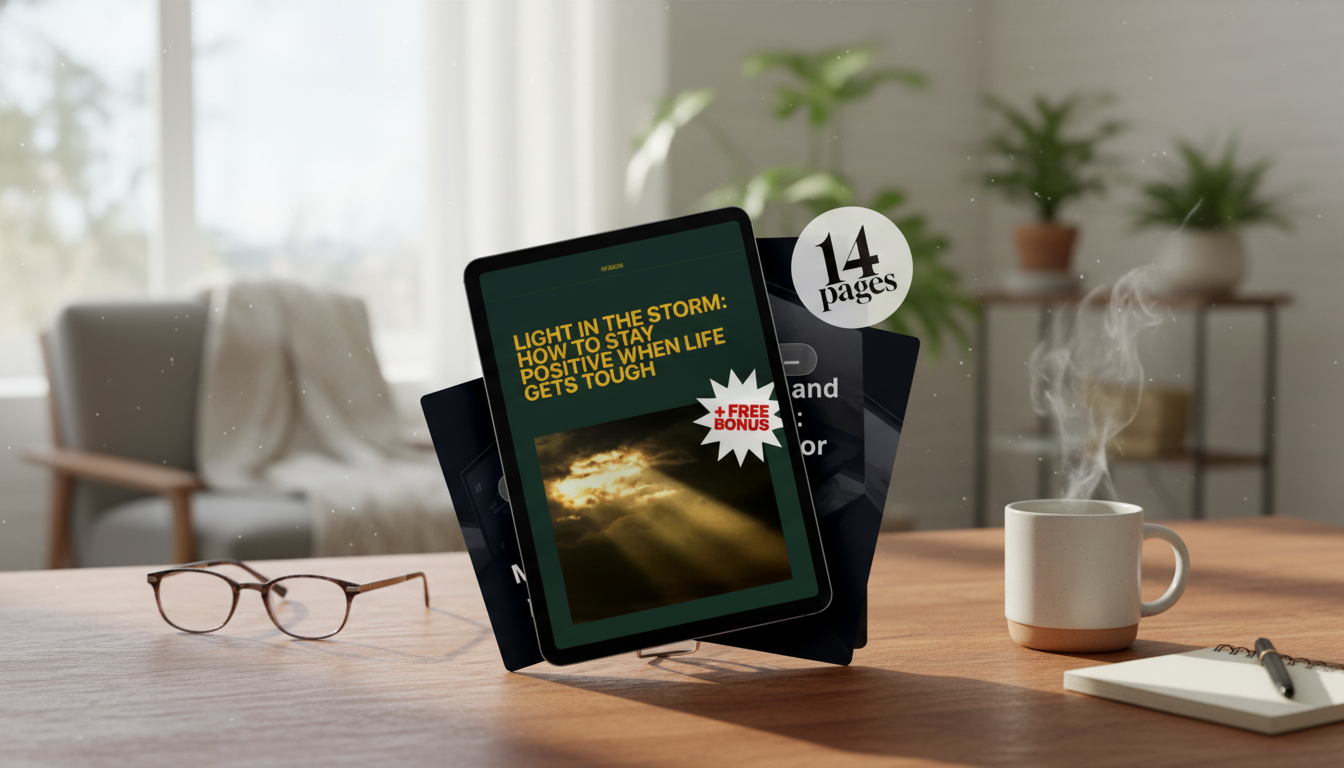
Light in the Storm: A Practical Way to Stay Positive When Life Gets Tough
Hard seasons can make it feel impossible to stay hopeful. This guide-focused approach breaks positivity into small, repeatable skills: steadying the nervous system, challenging unhelpful thoughts, choosing supportive actions, and building routines that make tough days more manageable. Use printable pages to practice one step at a time—especially when motivation is low.
When Life Hits Hard: What “Staying Positive” Really Means
Staying positive during grief, conflict, burnout, or major change isn’t about pretending everything is okay. It’s resilience: acknowledging what hurts while protecting your energy and focus so you can keep moving through the day.
Optimism helps when it’s grounded. Denial, on the other hand, pressures you to “get over it” before your mind and body have processed what happened. A more practical aim is to feel slightly steadier today than yesterday—not “fine” immediately, not cheerful on demand, just more supported and less pulled under.
Even small mental shifts matter most when life is intense, because they reduce rumination and widen your options. The goal isn’t to erase hard feelings; it’s to make space for them without letting them run the entire day.
Start With Safety: Reset the Body Before the Mind
When stress spikes, thinking narrows. Your brain prioritizes survival, not perspective. That’s why calming the body often makes “positive thinking” possible in the first place. If you feel stuck in a spiral, try starting with regulation instead of reasoning.
- Slow-exhale breathing: inhale for 4, exhale for 6; repeat for 2 minutes.
- 5-4-3-2-1 grounding: name 5 things you see, 4 you feel, 3 you hear, 2 you smell, 1 you taste.
- Brief movement: a brisk hallway walk, wall push, or a few shoulder rolls to discharge tension.
- “Safe-enough” basics: water, a simple snack, stepping into daylight, and reducing doom-scrolling.
A quick two-minute check-in can also keep you from guessing what you need: notice body signals (tight jaw, heavy chest), name emotions present (sad, scared, angry), then ask, “What’s the next immediate need?” (food, rest, a boundary, support, one small task).
Fast reset options for tough moments
| Situation | What it feels like | 2–5 minute reset | Next small step |
|---|---|---|---|
| Racing thoughts | Mind won’t slow down | Long exhale breathing (inhale 4, exhale 6) + name 3 sounds | Write one worry and one controllable action |
| Heavy sadness | Low energy, tears, numbness | Warm drink + gentle stretch + step into daylight | Text one supportive person or schedule a basic task |
| Anger or agitation | Tense jaw, urge to snap | Wall push or brisk walk + cold water on wrists | Delay response; draft message and wait 20 minutes |
| Overwhelm | Too much to handle at once | Brain dump list + pick the smallest item | Set a 10-minute timer and start |
How to Think Positive When Bad Things Happen (Without Forcing It)
When something painful happens, forced positivity often backfires. Instead of trying to “think happy,” name what your mind is doing and gently steer it toward something more balanced.
- Catastrophizing: jumping to the worst-case ending.
- Mind-reading: assuming you know what others think or intend.
- All-or-nothing thinking: “If I can’t fix it all, nothing matters.”
- “Should” statements: using guilt as a driver when you’re already depleted.
When facts are uncertain, switch the question from “Is it true?” to “Is it helpful right now?” Helpful thoughts don’t need to be rosy; they need to be stabilizing. Try balanced statements like: “This is hard, and I can handle the next step.”
If you need something more concrete, use an evidence-based reframe:
- What’s known: the facts you can verify.
- What’s unknown: what your mind is guessing.
- What’s controllable: the one or two actions you can take today.
Finally, use self-compassion language. Speak to yourself the way you’d speak to a friend living the same day: honest, kind, and focused on the next doable thing.
Tiny Actions That Restore Hope
Using the Printable PDF Like a Lifeline
For a structured set of printable pages built for this exact purpose, see Light in the Storm: How to Stay Positive When Life Gets Tough (Printable PDF).
Boundaries and Support: Staying Positive Is Not a Solo Sport
When you need help, ask specifically. “Can you sit with me for 15 minutes?” is easier to answer than “I’m not doing well.” “Can you handle this errand?” is clearer than “I’m overwhelmed.” Consider building a support menu: friends, family, therapy, faith/community, and support groups—plus crisis resources if needed. The National Institute of Mental Health overview of psychotherapies is a helpful starting point if you’re exploring therapy options.
A Gentle 7-Day Positivity Practice for Tough Weeks
If motivation is a recurring struggle (especially if you tend to keep the peace, avoid conflict, or go numb under stress), Waking the Peaceful Giant: How to Motivate Enneagram 9s can add extra structure for getting unstuck.
For more research-backed context on coping skills, the American Psychological Association’s guide to resilience and the Mayo Clinic’s stress management overview offer practical, reputable starting points.
FAQ
How can positivity help when something truly bad happened?
Positivity doesn’t deny pain; it supports your coping capacity so you can grieve, process, and still make constructive next-step choices. It can also reduce rumination and help you stay connected to support.
What if positive thinking feels fake or makes things worse?
Start with emotional honesty and body regulation, then use balanced thoughts instead of forced affirmations. A realistic reframe might be, “This is awful right now, and I can take one small step to care for myself today.”
Is the guide printable and usable on a phone?
Yes. It’s a digital PDF designed to print, and it can also be viewed on a phone or tablet for on-the-go reference; printing is often helpful for daily practice when stress is high.
Recommended for you



Was this article helpful?
Yes
No






Leave a comment