-
Shop
- Advanced Technologies
- AI Skills Mastery 2026 Collection
- Apple Accessories
- Arts, Crafts & Hobbies
- Best-Sellers
- Calvin Klein
- Car Accessories
- Christmas Collection
- Dating & Social Skills
- Denim
- 7FOR
- AGOLDE
- Antony Morato
- Armani Exchange
- Boss
- Brunello Cucinelli
- Calvin Klein Jeans
- Costume National
- Desigual
- Diesel
- Dolce & Gabbana
- Dsquared²
- Ermanno Scervino
- Fendi
- Gianni Lupo
- Guess Jeans
- Ichi
- Just Cavalli
- Lee
- Levi's
- Liu Jo
- Morgan De Toi
- Mother Denim
- Only
- Pepe Jeans
- Pinko
- Replay
- Tommy Hilfiger Jeans
- Valentino
- Vero Moda
- Digital Resources
- Car Buying & Ownership
- Cozy Feast Collection
- Emotional Intelligence
- Financial Education
- Home Styling & Organization
- Mindfulness
- Mindset
- Parenting & Child Development
- Pet Lifestyle & Wellness
- Positive Thinking
- Productivity
- Self Confidence
- Sleep Improvement
- Stress Management & Relaxation
- Travel Planning
- Yoga & Fitness
- Yoga & Mind-Body Practices
- Education & Learning
- Family & Parenting
- Fashion
- Accessories
- Alexander McQueen
- Bags
- Bags & Wallets
- Balenciaga
- Belts
- Blazers
- Blouses & Shirts
- Bottega Veneta
- Bottoms
- Brunello Cucinelli
- Burberry
- Chanel
- Chloé
- Dior
- Dolce & Gabbana
- Dresses
- Etro
- Gucci
- Hats & Hair Accessories
- Hoodies & Sweatshirts
- Jacquemus
- Jewelry
- Jil Sander
- Jimmy Choo
- Kiton
- Luggage
- Luggage Bags
- Men's Fashion
- Miu Miu
- Off-White
- Outerwear
- Prada
- Rick Owens
- Saint Laurent
- Skirts
- Socks & Tights
- Sunglasses
- Sweaters & Cardigans
- The Row
- Tom Ford
- Tops & Shirts
- Valentino Garavani
- Versace
- Vivienne Westwood
- Watches
- Fashion Accessories
- Furniture
- Gadgets
- Health & Beauty
- Health & Wellness
- Home & Garden
- Home Supplies
- Kids & Babies
- Lighting
- Patio, Lawn & Garden
- Personal Growth
- Pet Care
- Pet Supplies
- Pets
- Shoes
- Sport & Outdoors
- Super Deals
- Thanksgiving Digital Collection
- AI & Tech-Enhanced Thanksgiving
- Budgeting & Smart Shopping
- Eco-Friendly & Sustainable Thanksgiving
- Family & Kids
- Gift Ideas Guides
- Gratitude & Mindfulness
- History & Meaning
- Hosting & Planning
- Leftovers & Storage
- Pets & Thanksgiving
- Social Media Captions & Ideas
- Thanksgiving DIY Ideas
- Thanksgiving Recipes
- Thanksgiving Products
- Travel
- Wealth
- Wealth Building
- Budgeting & Saving
- Cryptocurrency Investing
- Debt Management
- Entrepreneurship & Business Growth
- Family Finance & Budgeting
- Financial Independence
- Financial Mindset & Psychology
- Financial Planning
- Frugal Living & Expense Hacks
- Goal Setting
- High-Income Skills
- Investing Basics
- Leadership
- Motivation
- Networking & Mentorship
- Passive Income Strategies
- Real Estate Investing
- Side Hustles
- Stock Market Investing
- YouTube Shorts Best-Sellers
Printable Calm Yoga Checklist for a Peaceful Daily Flow
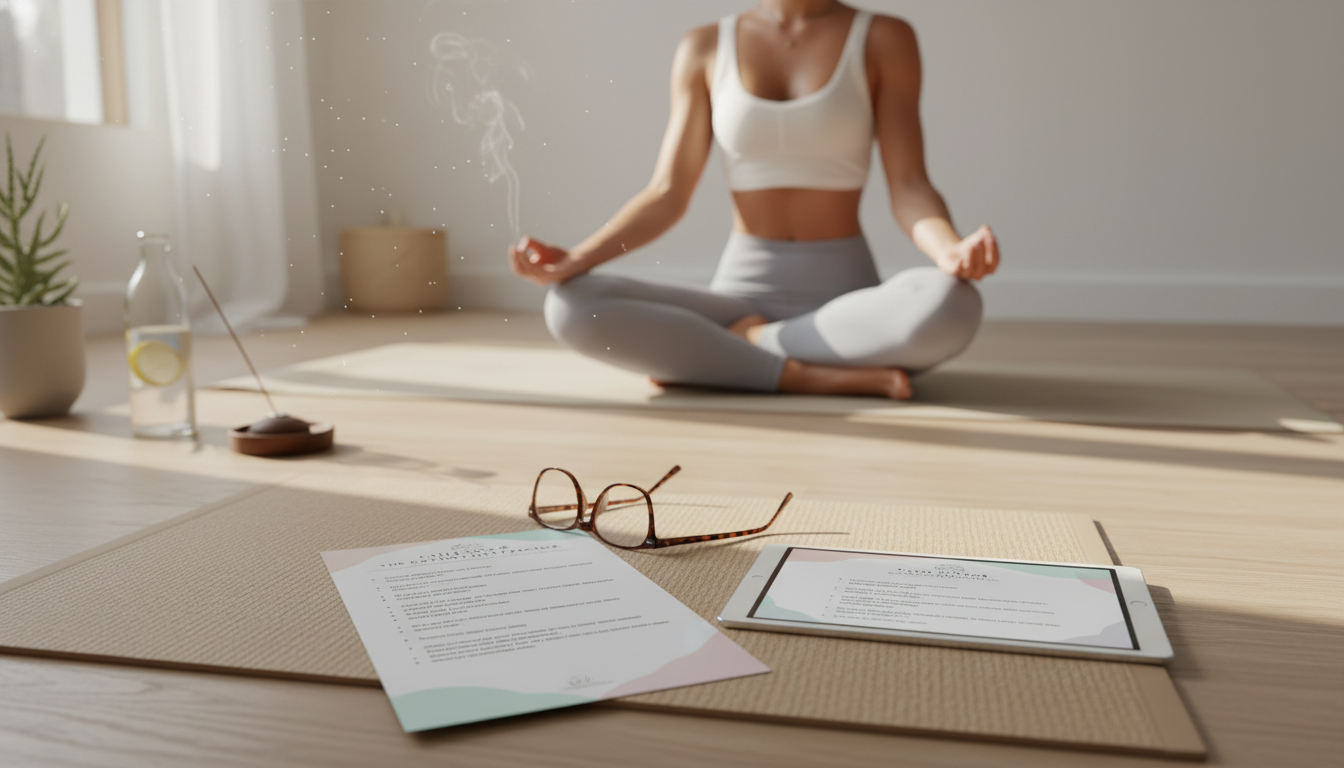
The Serene Flow Calm Yoga Checklist: A Printable Routine for a Peaceful Practice
A calm yoga routine is easier to keep when the steps are simple, repeatable, and gentle on busy days. The Serene Flow Calm Yoga Checklist is a digital download designed to guide a soothing practice from arrival to breathwork to closing—so calm feels more accessible, even when time and energy are limited. When the mind is already full, a clear sequence can remove the extra effort of deciding what to do next and help the body settle into a steadier rhythm.
What the checklist is—and how it supports calm
The checklist is a printable, step-by-step routine that reduces decision fatigue and supports consistency. Instead of building a sequence from scratch each time, you follow a quiet structure—arrive, warm up, hold steady shapes, breathe, and close—so the practice feels like a soft landing rather than another task to manage.
It’s designed for a low-pressure flow: grounding, steady breath, and mindful transitions. Beginners often appreciate knowing what comes next, while experienced practitioners can use it as a simple reset when motivation is low or life feels noisy. It also works well for short sessions (10–20 minutes) or as a framework you can expand into a longer practice.
If you want a ready-to-print version that fits easily into a morning or evening routine, you can find it here: The Serene Flow Calm Yoga Checklist: Your Path to Peaceful Practice.
A gentle flow you can repeat any day
The most soothing routines are often the most repeatable. A calm flow doesn’t need to be long or intense; it needs to be approachable. Start with a brief arrival ritual (settle the space, soften your gaze, notice the breath), then move through warm-ups that ease common tension areas like the neck, shoulders, and spine without strain.
Next, add a few steady poses held for comfort rather than intensity. Think “supported and sustainable,” not “pushed and proven.” After that, include a short breathwork segment to steady attention and reduce mental chatter, and finish with a simple closing reflection or intention—something you can carry into the next part of your day.
Example calm-practice checklist (printable-friendly)
| Step | Time | What to do | Cue to stay calm |
|---|---|---|---|
| Arrive | 1–2 min | Sit or lie down, unclench jaw, relax shoulders | Exhale longer than inhale |
| Warm up | 3–5 min | Gentle cat-cow, shoulder rolls, easy twists | Move at 60% effort |
| Steady poses | 5–10 min | Comfortable holds (e.g., forward fold, low lunge, child’s pose) | Soften the belly and face |
| Breathwork | 2–5 min | Slow nasal breathing or counted breathing | If dizzy, return to natural breath |
| Close | 1–3 min | Savasana or seated stillness, brief intention | Feel the support beneath you |
Mindfulness cues that make the routine feel easier
Calm often comes from reducing “mental tabs” rather than adding more techniques. A few simple cues can make the checklist feel lighter and more doable:
- Use one anchor. Choose breath, sensation at the nostrils, or contact points with the floor. When attention drifts, return to that single reference.
- Name the moment simply. Quiet labels like “inhaling,” “exhaling,” or “softening” can reduce mental overload and keep practice steady.
- Choose one quality for the session. Pick a word like steady, kind, or quiet. When distracted, come back to that quality rather than judging the distraction.
- Slow your transitions. Rushing between poses often reactivates stress. A slower pace helps the nervous system register safety.
- End with one practical takeaway. Examples: one calming breath before opening email, one shoulder drop at stoplights, or a softer jaw while waiting in line.
Breathwork options for different moods
Breathwork is most calming when it feels unforced. Keep it gentle, and treat counting as a suggestion rather than a requirement. If you’d like background on how breathing can help quiet stress responses, Harvard Health Publishing offers an accessible overview of relaxation and breath control here: Relaxation techniques: Breath control helps quell errant stress response.
- For restlessness: Try slightly longer exhales (for example, inhale 4 counts, exhale 6 counts) to encourage downshifting.
- For low energy: Use gentle equal breathing (inhale 4, exhale 4) to steady attention without feeling sedated.
- For overwhelm: Try a “box” style count at a comfortable pace (inhale-hold-exhale-hold with equal counts), and stop immediately if strain appears.
- For bedtime: Keep breaths light and quiet with minimal counting to avoid performance pressure.
- Safety note: Breathwork should never feel forceful. If you feel uncomfortable, return to natural breathing.
For a broader look at yoga’s role in wellness and common considerations, the National Center for Complementary and Integrative Health provides a helpful overview: NCCIH — Yoga: What You Need to Know.
Printing and using the digital download
Who it’s best for (and when it helps most)
If you’re also building a more comfortable day-to-day rhythm around your practice—like walking to a class or running errands after a short session—supportive everyday footwear can help keep the “reset” feeling going beyond the mat. One option to explore is The Row Moveo Lace-Up Sneakers.
FAQ
How long should a calm yoga session be to feel effective?
Many people feel a shift in 10–30 minutes, especially when the pace is slow and the closing is quiet. Consistency matters more than length, so a brief session done regularly can be more grounding than an occasional long practice.
Is this checklist suitable for beginners?
Yes. The step-by-step structure removes guesswork and encourages a gentle pace. Start with comfortable ranges of motion, modify poses as needed, and keep breathwork light and unforced.
What if breathwork makes someone feel dizzy or anxious?
Return to natural breathing right away and reduce any counting or effort. Keep breaths soft rather than deep, and consider consulting a clinician if symptoms persist or if you have medical considerations that affect breathing.
Recommended for you


Was this article helpful?
Yes
No






Leave a comment