-
Shop
- Advanced Technologies
- AI Skills Mastery 2026 Collection
- Apple Accessories
- Arts, Crafts & Hobbies
- Best-Sellers
- Calvin Klein
- Car Accessories
- Christmas Collection
- Dating & Social Skills
- Denim
- 7FOR
- AGOLDE
- Antony Morato
- Armani Exchange
- Boss
- Brunello Cucinelli
- Calvin Klein Jeans
- Costume National
- Desigual
- Diesel
- Dolce & Gabbana
- Dsquared²
- Ermanno Scervino
- Fendi
- Gianni Lupo
- Guess Jeans
- Ichi
- Just Cavalli
- Lee
- Levi's
- Liu Jo
- Morgan De Toi
- Mother Denim
- Only
- Pepe Jeans
- Pinko
- Replay
- Tommy Hilfiger Jeans
- Valentino
- Vero Moda
- Digital Resources
- Car Buying & Ownership
- Cozy Feast Collection
- Emotional Intelligence
- Financial Education
- Home Styling & Organization
- Mindfulness
- Mindset
- Parenting & Child Development
- Pet Lifestyle & Wellness
- Positive Thinking
- Productivity
- Self Confidence
- Sleep Improvement
- Stress Management & Relaxation
- Travel Planning
- Yoga & Fitness
- Yoga & Mind-Body Practices
- Education & Learning
- Family & Parenting
- Fashion
- Accessories
- Alexander McQueen
- Bags
- Bags & Wallets
- Balenciaga
- Belts
- Blazers
- Blouses & Shirts
- Bottega Veneta
- Bottoms
- Brunello Cucinelli
- Burberry
- Chanel
- Chloé
- Dior
- Dolce & Gabbana
- Dresses
- Etro
- Gucci
- Hats & Hair Accessories
- Hoodies & Sweatshirts
- Jacquemus
- Jewelry
- Jil Sander
- Jimmy Choo
- Kiton
- Luggage
- Luggage Bags
- Men's Fashion
- Miu Miu
- Off-White
- Outerwear
- Prada
- Rick Owens
- Saint Laurent
- Skirts
- Socks & Tights
- Sunglasses
- Sweaters & Cardigans
- The Row
- Tom Ford
- Tops & Shirts
- Valentino Garavani
- Versace
- Vivienne Westwood
- Watches
- Fashion Accessories
- Furniture
- Gadgets
- Health & Beauty
- Health & Wellness
- Home & Garden
- Home Supplies
- Kids & Babies
- Lighting
- Patio, Lawn & Garden
- Personal Growth
- Pet Care
- Pet Supplies
- Pets
- Shoes
- Sport & Outdoors
- Super Deals
- Thanksgiving Digital Collection
- AI & Tech-Enhanced Thanksgiving
- Budgeting & Smart Shopping
- Eco-Friendly & Sustainable Thanksgiving
- Family & Kids
- Gift Ideas Guides
- Gratitude & Mindfulness
- History & Meaning
- Hosting & Planning
- Leftovers & Storage
- Pets & Thanksgiving
- Social Media Captions & Ideas
- Thanksgiving DIY Ideas
- Thanksgiving Recipes
- Thanksgiving Products
- Travel
- Wealth
- Wealth Building
- Budgeting & Saving
- Cryptocurrency Investing
- Debt Management
- Entrepreneurship & Business Growth
- Family Finance & Budgeting
- Financial Independence
- Financial Mindset & Psychology
- Financial Planning
- Frugal Living & Expense Hacks
- Goal Setting
- High-Income Skills
- Investing Basics
- Leadership
- Motivation
- Networking & Mentorship
- Passive Income Strategies
- Real Estate Investing
- Side Hustles
- Stock Market Investing
- YouTube Shorts Best-Sellers
Herb Saver for Cilantro: Keep Fresh Herbs Crisp Longer
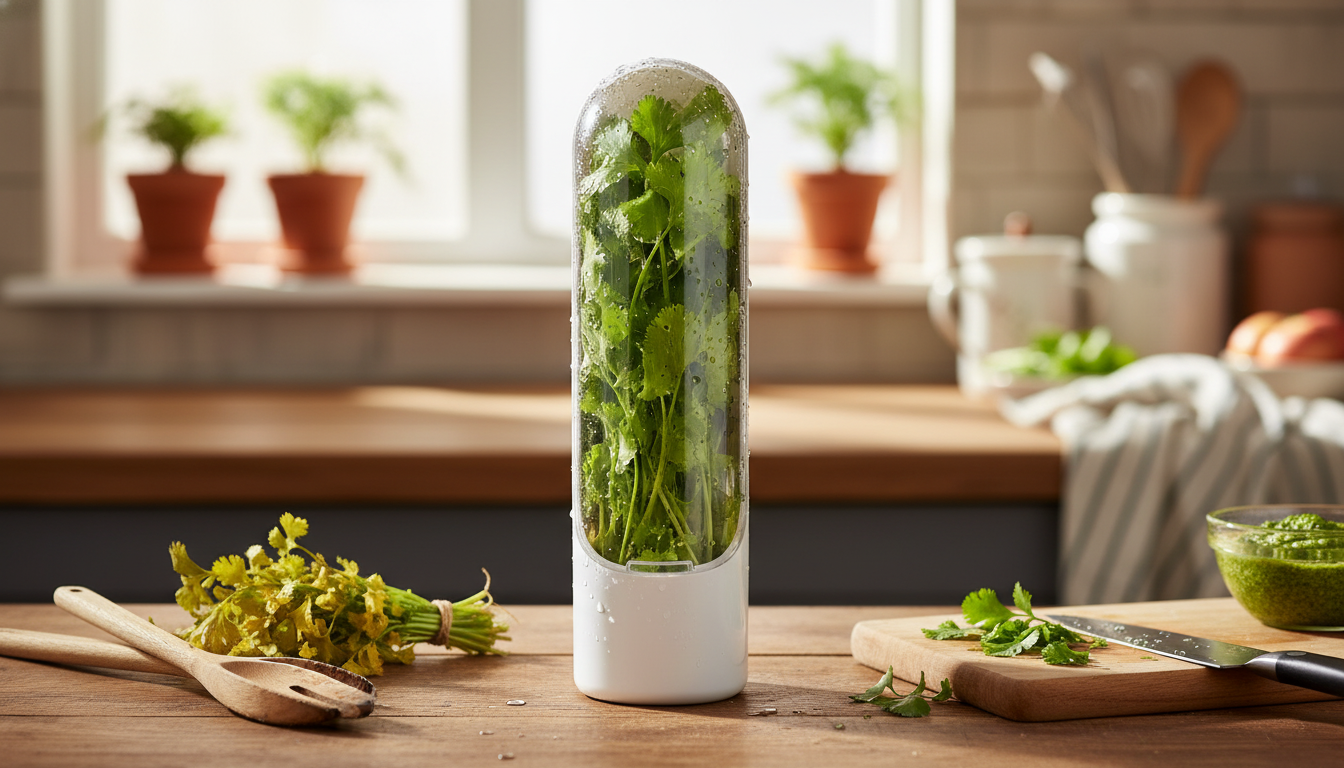
Herb Saver Container for Cilantro and Fresh Herbs: Keep Bunches Crisp Longer
Fresh herbs tend to wilt fast once a bunch is opened—especially delicate cilantro. A dedicated herb saver container helps control moisture and airflow, keeping stems hydrated while reducing soggy leaves and lingering fridge odors. Below is a practical guide to why herbs decline so quickly, how an herb saver works, and a simple routine for storing cilantro, parsley, mint, dill, and more with less waste.
Why herbs spoil quickly in the refrigerator
Most fresh herbs are “high surface area” foods: lots of thin leaves that lose water quickly and bruise easily. In a refrigerator—where airflow is dry and temperatures fluctuate every time the door opens—those weaknesses show up fast.
- Rapid moisture loss: Cilantro and other tender herbs transpire through their leaves. As water escapes, stems go limp and leaves can yellow.
- Too much surface moisture: Wet leaves plus tight packaging can create condensation. That trapped water accelerates sliminess and decay.
- Ethylene exposure: Some fruits and vegetables release ethylene gas as they ripen, which can speed aging in nearby produce. Keeping herbs separated can help.
- Bruising and crushing: Soft leaves bruise when packed tightly or pressed under heavier items. Bruised spots darken and can taste bitter or “off.”
For general storage guidance and food quality tips, the USDA’s FoodKeeper app is a helpful reference point for what “good” storage conditions look like.
How a herb saver container helps
A herb saver container is designed to keep herbs hydrated without turning them into a wet, compacted bundle. The concept is simple: stems get access to water, while leaves stay as dry and protected as possible.
- Hydrates from the bottom up: Stems sit in a small water reservoir to maintain crispness without soaking leaf clusters.
- Reduces dehydration while limiting condensation: The container creates a controlled micro-environment that slows moisture loss but doesn’t trap as much water on leaf surfaces.
- Prevents crushing: A rigid shell protects fragile herbs from being flattened by leftovers, beverage cartons, and produce drawers.
- Helps with fridge odors: Cilantro’s aroma can be strong. A dedicated container helps keep that scent from transferring to nearby foods.
If you cook with herbs often, a dedicated option like the Herb Saver Container for Cilantro and Fresh Herbs is an easy way to keep bunches ready for tacos, soups, salads, and marinades throughout the week.
Using an herb saver container for cilantro (best-practice routine)
Cilantro responds best when you treat it like a bouquet: fresh cut stems, a small amount of clean water, and dry leaves. This routine takes only a couple of minutes and pays off all week.
- Trim stems: Cut about 1/4–1/2 inch off the bottom to open fresh pathways for water uptake.
- Rinse only if needed: If there’s visible grit, rinse briefly. Otherwise, skip washing until right before use.
- Dry thoroughly if washed: Damp-free leaves matter. Use a salad spinner or paper towels and let the bunch air-dry a few minutes.
- Add water to the reservoir: Keep leaf clusters above the waterline; only stems should be submerged.
- Maintain it: Check water every 2–3 days. Refresh if cloudy, and remove any wilted or slimy sprigs so spoilage doesn’t spread.
- Choose a steady fridge zone: Place it toward the back (not in the door), where temperature changes are smaller.
For additional produce handling and freshness practices, UC Agriculture and Natural Resources provides practical food handling resources: UC ANR: Fresh Herb Storage and Handling resources.
Quick storage guide for common fresh herbs
| Herb | Best setup in herb saver | Water refresh | Extra tip |
|---|---|---|---|
| Cilantro | Stems in water, leaves dry | Every 2–3 days | Remove rubber band; don’t pack tightly |
| Parsley | Stems in water, leaves dry | Every 3–4 days | Trim stems again if water uptake slows |
| Mint | Stems in water; give space | Every 2–3 days | Handle gently to avoid bruising |
| Dill | Stems in water; support fronds | Every 2–3 days | Keep away from warm door shelves |
| Chives | Minimal water; upright | Every 4–5 days | Pat dry well—chives hold moisture |
Common mistakes that shorten herb life
If herbs still go bad quickly in a saver container, the issue is usually one of a few fixable habits.
Herb Saver Container for Cilantro and Fresh Herbs: what it’s good for
If you also shop farmers markets or transport groceries on hot days, a separate cold-storage option can protect delicate produce on the way home. The Portable Camping Cooler Bag can help keep herbs cooler in transit so they start out in better condition before you store them.
Care and cleaning
When to choose a different method
FAQ
How long can cilantro last in a herb saver container?
Often 7–14 days, depending on how fresh it was when purchased and whether you keep the leaves dry, trim the stems, and refresh the water. Discard cilantro if it becomes slimy, smells sour, or shows widespread yellowing and mushy stems.
Should cilantro be washed before putting it in an herb saver container?
Washing is optional; many people wait to rinse until right before use. If you do wash it first, remove damaged leaves and dry the bunch thoroughly so moisture doesn’t sit on the leaves and trigger sliminess.
Can a herb saver container be used for mint, parsley, and dill?
Yes—these stemmed herbs usually do well with stems in clean water and leaves kept above the waterline. Mint bruises easily (handle gently), and dill fronds benefit from upright support; refreshing water every 2–4 days helps maintain quality.
Recommended for you



Was this article helpful?
Yes
No







Leave a comment