-
Shop
- Advanced Technologies
- AI Skills Mastery 2026 Collection
- Apple Accessories
- Arts, Crafts & Hobbies
- Best-Sellers
- Calvin Klein
- Car Accessories
- Christmas Collection
- Dating & Social Skills
- Denim
- 7FOR
- AGOLDE
- Antony Morato
- Armani Exchange
- Boss
- Brunello Cucinelli
- Calvin Klein Jeans
- Costume National
- Desigual
- Diesel
- Dolce & Gabbana
- Dsquared²
- Ermanno Scervino
- Fendi
- Gianni Lupo
- Guess Jeans
- Ichi
- Just Cavalli
- Lee
- Levi's
- Liu Jo
- Morgan De Toi
- Mother Denim
- Only
- Pepe Jeans
- Pinko
- Replay
- Tommy Hilfiger Jeans
- Valentino
- Vero Moda
- Digital Resources
- Car Buying & Ownership
- Cozy Feast Collection
- Emotional Intelligence
- Financial Education
- Home Styling & Organization
- Mindfulness
- Mindset
- Parenting & Child Development
- Pet Lifestyle & Wellness
- Positive Thinking
- Productivity
- Self Confidence
- Sleep Improvement
- Stress Management & Relaxation
- Travel Planning
- Yoga & Fitness
- Yoga & Mind-Body Practices
- Education & Learning
- Family & Parenting
- Fashion
- Accessories
- Alexander McQueen
- Bags
- Bags & Wallets
- Balenciaga
- Belts
- Blazers
- Blouses & Shirts
- Bottega Veneta
- Bottoms
- Brunello Cucinelli
- Burberry
- Chanel
- Chloé
- Dior
- Dolce & Gabbana
- Dresses
- Etro
- Gucci
- Hats & Hair Accessories
- Hoodies & Sweatshirts
- Jacquemus
- Jewelry
- Jil Sander
- Jimmy Choo
- Kiton
- Luggage
- Luggage Bags
- Men's Fashion
- Miu Miu
- Off-White
- Outerwear
- Prada
- Rick Owens
- Saint Laurent
- Skirts
- Socks & Tights
- Sunglasses
- Sweaters & Cardigans
- The Row
- Tom Ford
- Tops & Shirts
- Valentino Garavani
- Versace
- Vivienne Westwood
- Watches
- Fashion Accessories
- Furniture
- Gadgets
- Health & Beauty
- Health & Wellness
- Home & Garden
- Home Supplies
- Kids & Babies
- Lighting
- Patio, Lawn & Garden
- Personal Growth
- Pet Care
- Pet Supplies
- Pets
- Shoes
- Sport & Outdoors
- Super Deals
- Thanksgiving Digital Collection
- AI & Tech-Enhanced Thanksgiving
- Budgeting & Smart Shopping
- Eco-Friendly & Sustainable Thanksgiving
- Family & Kids
- Gift Ideas Guides
- Gratitude & Mindfulness
- History & Meaning
- Hosting & Planning
- Leftovers & Storage
- Pets & Thanksgiving
- Social Media Captions & Ideas
- Thanksgiving DIY Ideas
- Thanksgiving Recipes
- Thanksgiving Products
- Travel
- Wealth
- Wealth Building
- Budgeting & Saving
- Cryptocurrency Investing
- Debt Management
- Entrepreneurship & Business Growth
- Family Finance & Budgeting
- Financial Independence
- Financial Mindset & Psychology
- Financial Planning
- Frugal Living & Expense Hacks
- Goal Setting
- High-Income Skills
- Investing Basics
- Leadership
- Motivation
- Networking & Mentorship
- Passive Income Strategies
- Real Estate Investing
- Side Hustles
- Stock Market Investing
- YouTube Shorts Best-Sellers
Expandable Airline-Approved Pet Carrier: Fit & Comfort
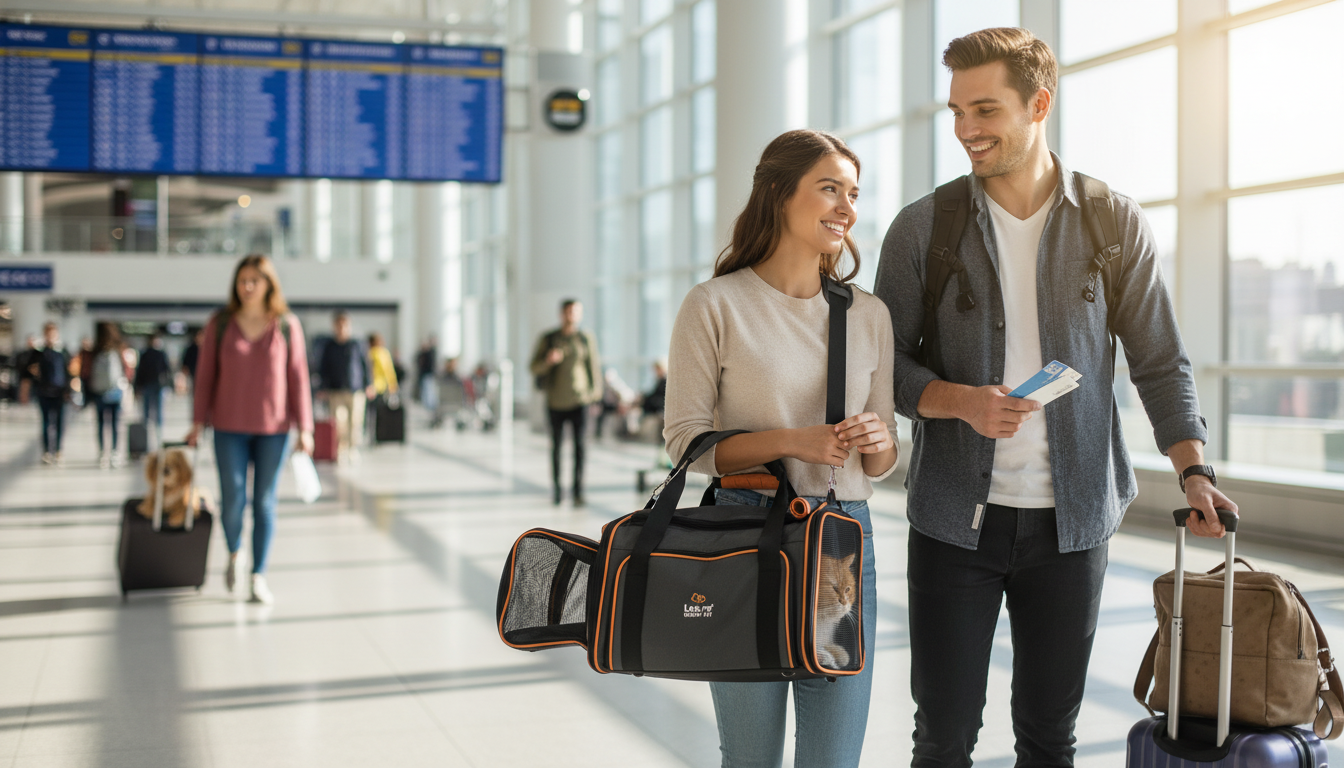
Expandable Airline-Approved Pet Travel Carrier: Comfort, Fit, and Flight-Ready Details
An expandable pet carrier can make a big difference on travel day: it needs to fit under the seat during takeoff and landing, keep a pet secure, and offer extra room once it’s safe to expand. This guide breaks down what matters most—dimensions, ventilation, materials, safety features, and airline realities—so the right carrier feels like a calm, familiar space from curb to cabin.
What “airline-approved” usually means (and what it doesn’t)
Most airlines allow small cats and dogs to travel in-cabin as long as the carrier fits fully under the seat in front of you. The catch is that under-seat limits vary by airline and can even vary by aircraft type, so a carrier described as “airline-friendly” isn’t an automatic pass.
Final acceptance also depends on whether the carrier can close completely, stays structurally stable, and appears to comfortably contain your pet without bulging beyond the space. Soft-sided carriers are often favored because they flex slightly, but they still need to fit cleanly under the seat without forcing zippers, mesh, or seams into a stressed position.
Another common reality: in-cabin rules typically require your pet to remain inside the carrier for most (or all) of the flight. That makes comfort features—airflow, a stable base, and easy access for quick checks—more than “nice-to-haves.” For practical trip planning, review TSA pet screening guidance before you fly and keep your airline’s pet policy handy. Helpful references include TSA – Traveling with Pets and the U.S. Department of Transportation consumer travel resources.
Key design elements that improve comfort and compliance
Expandable carriers work best when they stay compact when stowed, then add room only when it’s appropriate—like while waiting at the gate or relaxing at the destination. Look for expansion panels that zip closed flush so the carrier maintains its intended travel footprint.
Ventilation is another make-or-break detail. Multiple mesh sides improve airflow and visibility, which can reduce stress and overheating risk in busy terminals. Structure matters too: reinforced seams and a supportive base help prevent sagging when carried, and that stability can keep a pet from sliding and panicking.
Finally, entry points and closures influence both safety and convenience. Top and side openings can make loading a nervous pet easier, while secure zippers reduce escape risk during check-in lines and boarding.
| Feature | Why it matters | What to look for |
|---|---|---|
| Expandable sides | More room without sacrificing under-seat fit | Panels that zip closed flush; expansion that doesn’t collapse easily |
| Breathable mesh | Comfort and temperature control | Mesh on multiple sides; durable stitching; minimal snag points |
| Firm base | Stability and reduced stress for the pet | Support insert; even weight distribution; non-sag feel when lifted |
| Leash tether/attachment | Extra security when opening the carrier | Interior clip point that’s sturdy and positioned away from zippers |
| Carry options | Comfort for the handler and steady ride for the pet | Padded handles; shoulder strap; balanced center of gravity |
Sizing: matching the carrier to the pet and the airplane
Start with measurements. For most pets, you’ll want their length (nose to base of tail) and height (floor to shoulders or head—use the guidance your airline specifies). The best carrier fit allows a pet to stand, turn around, and lie down naturally, but it also must not force the carrier to bulge beyond under-seat limits.
Materials and build quality that hold up to real travel
If you’re curious about broader transport standards for animals, the IATA Live Animals Regulations provide background on industry expectations (even though in-cabin pet rules are still set by each airline).
Airport and in-flight handling tips for an expandable carrier
When an expandable carrier is the best choice (and when it isn’t)
Product spotlight: Expandable Airline-Approved Pet Travel Carrier
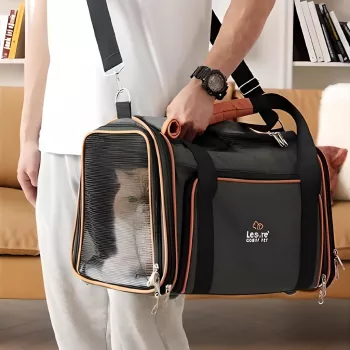
If you’re looking for a travel-ready option built around a compact footprint with comfort upgrades, the Expandable Airline-Approved Pet Travel Carrier is designed to keep a streamlined profile for under-seat stowage while offering expandable space when conditions allow. Mesh ventilation supports airflow and visibility in crowded environments, and the soft-sided build can be easier to fit under many airline seats than rigid carriers while still feeling cozy for your pet.
Other travel-day add-ons that pair well
- The Row Moveo Lace-Up Sneakers: supportive airport footwear can help you carry a pet more steadily through long terminals.
- Mini HD 720P WiFi Camera: useful for checking in on your pet once you arrive at a hotel or rental (where allowed).
FAQ
Can an expandable carrier be used in-cabin if it expands beyond under-seat space?
It must fit fully under the seat during taxi, takeoff, and landing. Expansion is typically only appropriate when it doesn’t interfere with space, airflow, or crew instructions, and you can return it to compact mode immediately if needed.
How do airlines decide whether a pet carrier is acceptable at the gate?
Airlines look at their size rules, whether the carrier closes securely, whether it fits under the seat, and whether your pet appears comfortably contained. Gate agents may also assess whether the carrier keeps its shape without excessive bulging or gaps.
What’s the safest way to prevent escapes when opening the carrier?
Use an interior tether/clip when appropriate, keep all zippers closed except the single access point you’re using, and only open the carrier in controlled areas away from crowds. Move slowly and keep a firm hand on the opening until it’s fully re-secured.
Recommended for you


Was this article helpful?
Yes
No








Leave a comment