-
Shop
- Advanced Technologies
- AI Skills Mastery 2026 Collection
- Apple Accessories
- Arts, Crafts & Hobbies
- Best-Sellers
- Calvin Klein
- Car Accessories
- Christmas Collection
- Dating & Social Skills
- Denim
- 7FOR
- AGOLDE
- Antony Morato
- Armani Exchange
- Boss
- Brunello Cucinelli
- Calvin Klein Jeans
- Costume National
- Desigual
- Diesel
- Dolce & Gabbana
- Dsquared²
- Ermanno Scervino
- Fendi
- Gianni Lupo
- Guess Jeans
- Ichi
- Just Cavalli
- Lee
- Levi's
- Liu Jo
- Morgan De Toi
- Mother Denim
- Only
- Pepe Jeans
- Pinko
- Replay
- Tommy Hilfiger Jeans
- Valentino
- Vero Moda
- Digital Resources
- Car Buying & Ownership
- Cozy Feast Collection
- Emotional Intelligence
- Financial Education
- Home Styling & Organization
- Mindfulness
- Mindset
- Parenting & Child Development
- Pet Lifestyle & Wellness
- Positive Thinking
- Productivity
- Self Confidence
- Sleep Improvement
- Stress Management & Relaxation
- Travel Planning
- Yoga & Fitness
- Yoga & Mind-Body Practices
- Education & Learning
- Family & Parenting
- Fashion
- Accessories
- Alexander McQueen
- Bags
- Bags & Wallets
- Balenciaga
- Belts
- Blazers
- Blouses & Shirts
- Bottega Veneta
- Bottoms
- Brunello Cucinelli
- Burberry
- Chanel
- Chloé
- Dior
- Dolce & Gabbana
- Dresses
- Etro
- Gucci
- Hats & Hair Accessories
- Hoodies & Sweatshirts
- Jacquemus
- Jewelry
- Jil Sander
- Jimmy Choo
- Kiton
- Luggage
- Luggage Bags
- Men's Fashion
- Miu Miu
- Off-White
- Outerwear
- Prada
- Rick Owens
- Saint Laurent
- Skirts
- Socks & Tights
- Sunglasses
- Sweaters & Cardigans
- The Row
- Tom Ford
- Tops & Shirts
- Valentino Garavani
- Versace
- Vivienne Westwood
- Watches
- Fashion Accessories
- Furniture
- Gadgets
- Health & Beauty
- Health & Wellness
- Home & Garden
- Home Supplies
- Kids & Babies
- Lighting
- Patio, Lawn & Garden
- Personal Growth
- Pet Care
- Pet Supplies
- Pets
- Shoes
- Sport & Outdoors
- Super Deals
- Thanksgiving Digital Collection
- AI & Tech-Enhanced Thanksgiving
- Budgeting & Smart Shopping
- Eco-Friendly & Sustainable Thanksgiving
- Family & Kids
- Gift Ideas Guides
- Gratitude & Mindfulness
- History & Meaning
- Hosting & Planning
- Leftovers & Storage
- Pets & Thanksgiving
- Social Media Captions & Ideas
- Thanksgiving DIY Ideas
- Thanksgiving Recipes
- Thanksgiving Products
- Travel
- Wealth
- Wealth Building
- Budgeting & Saving
- Cryptocurrency Investing
- Debt Management
- Entrepreneurship & Business Growth
- Family Finance & Budgeting
- Financial Independence
- Financial Mindset & Psychology
- Financial Planning
- Frugal Living & Expense Hacks
- Goal Setting
- High-Income Skills
- Investing Basics
- Leadership
- Motivation
- Networking & Mentorship
- Passive Income Strategies
- Real Estate Investing
- Side Hustles
- Stock Market Investing
- YouTube Shorts Best-Sellers
Stress-Free Dinner Routine for Busy Weeks (5 Steps)
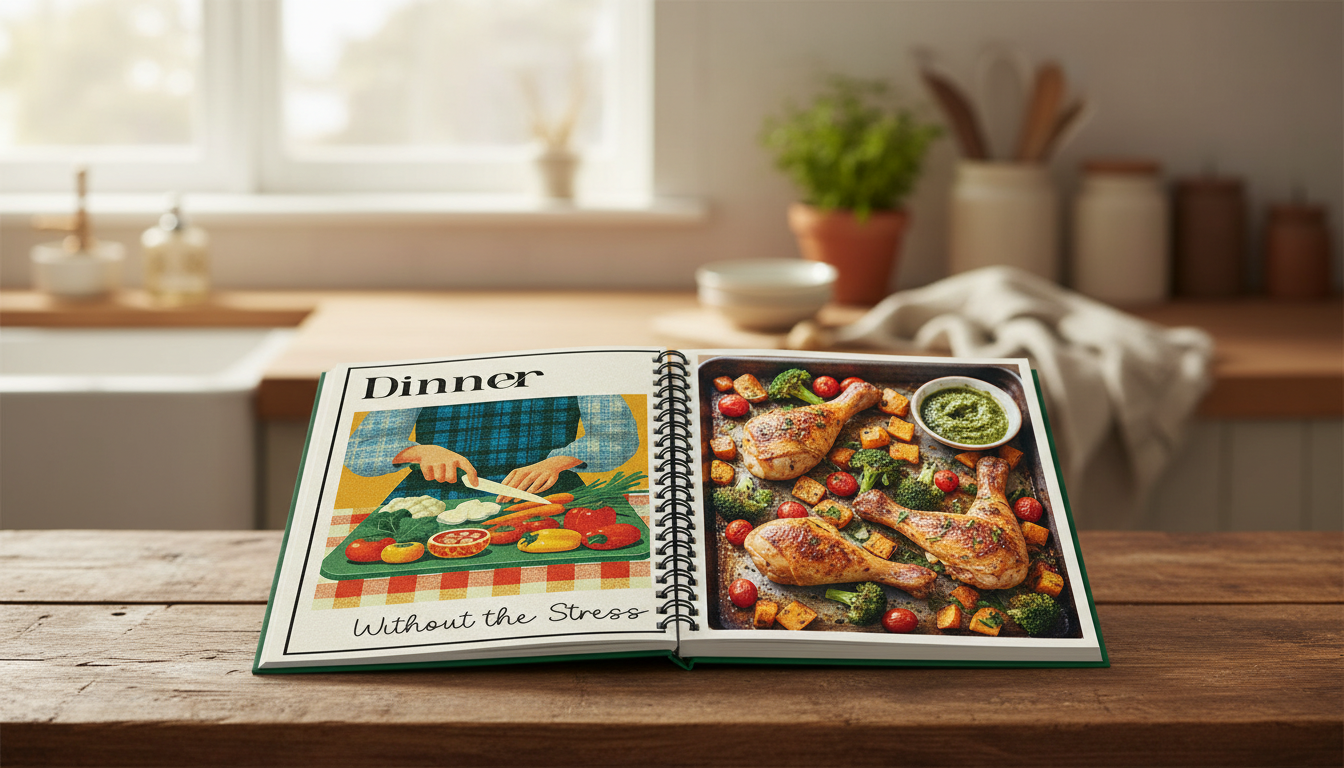
Dinner Without the Stress: A Simple Dinner Routine for Busy Weeks
Even when cooking is enjoyable, the daily question of “what’s for dinner?” can turn evenings into a scramble. A dependable routine removes the repeated decision-making, keeps groceries predictable, and makes dinner feel manageable—whether the household is feeding kids, roommates, or a packed work schedule. The aim isn’t a flawless meal plan; it’s a weekly system that stays steady when life gets messy and still leaves room for flexibility.
Why dinner feels stressful (and what a routine fixes)
Most weeknight stress isn’t caused by cooking itself—it’s caused by the number of decisions that pile up before cooking even starts. After work, school pickup, errands, and emails, dinner becomes one more high-stakes choice when energy is at its lowest.
When planning happens “whenever there’s time,” gaps show up fast: a missing protein, produce that spoils before it gets used, and the familiar last-minute takeout order that costs more than planned. That cycle can feel discouraging, especially if you’re also trying to eat in a balanced way.
A routine replaces daily decisions with a repeatable pattern. Instead of asking “what’s for dinner?” every day, you rely on a small set of defaults, a set shopping window, and a plan that allows swapping nights without breaking. Consistency creates breathing room—even if plans change, someone gets sick, or a meeting runs late. If stress has been affecting your evenings, resources like Harvard Health Publishing’s guide to stress management can also help you build supportive habits outside the kitchen.
Build a weekly rhythm: the 5-step dinner routine
Step 1: Pick a planning day and a shopping window
Choose one day to plan and one predictable window to shop (or place a pickup/delivery order). Many households do this on Saturday or Sunday, but any day works if it’s repeatable. The main win is removing “random planning” from the week.
Step 2: Decide how many nights you’ll actually cook
Be realistic: most busy weeks run smoothly with 3–5 cook nights. Then schedule leftovers and one “no-cook” night on purpose (instead of “accidentally” when you’re exhausted).
Step 3: Create a short list of default dinners
Defaults are meals that are fast, reliable, and broadly liked. They’re the backbone of the routine. They also make grocery shopping easier because you’ll recognize patterns in what you buy.
Step 4: Write a flexible menu
Plan dinners in a way that lets you swap nights. For example, put the fastest meals on your busiest evenings and keep at least one pantry/freezer-based option for schedule surprises.
Step 5: Use a repeatable grocery list structure
Instead of rewriting your list from scratch, keep the same categories every week—produce, proteins, pantry, snacks—and fill them based on your menu. This reduces missed items and speeds up ordering.
Choose your “default dinner” categories (so planning takes minutes)
Categories reduce options without making meals feel repetitive. A simple approach is to pick one meal from each category, keep 2–3 recipes you can rotate, and do seasonal swaps instead of reinventing the week.
Match effort to energy: if Tuesdays are packed, make that a 15–20 minute meal. If you have one lighter evening, schedule the meal that takes a little longer. Finally, include a buffer meal (freezer/pantry) so a sudden change doesn’t derail the whole plan.
Dinner category planner (mix and match)
| Category | What to keep on hand | Example night |
|---|---|---|
| Sheet-pan | Frozen veggies, chicken sausage/tofu, a simple spice blend | Veggie + protein tray bake |
| Bowls | Rice/quinoa, beans, salsa/sauce, greens | Rice bowl with beans and toppings |
| Tacos/Sandwiches | Tortillas/bread, shredded cheese, quick slaw | Taco night with leftover protein |
| Soup/Salad | Broth, canned tomatoes, lentils, salad kit | Lentil soup + salad |
| Breakfast-for-dinner | Eggs, frozen hash browns, fruit | Scramble + toast |
Make the plan stick: batching, prep shortcuts, and leftovers by design
The easiest routines don’t require a full weekend meal prep. Instead, batch components that unlock multiple dinners:
A low-stress grocery system for busy families and professionals
If you’re aiming for balanced plates without overthinking dinner, USDA MyPlate offers practical, flexible guidance and tools at MyPlate.gov.
Troubleshooting common dinner routine problems
If plans fall apart midweek
If the household has different preferences
If time disappears
If motivation drops
A ready-made guide to simplify the whole process
If you want a step-by-step structure you can reuse every week, a simple template can turn the routine into a repeatable habit. Dinner Without the Stress (digital download) is designed for quick planning, flexible menus, and a practical weekly flow you can keep on your phone or print for the fridge.
For households that rely on pickup runs, sports practices, or commuting days, having the right carry-and-go setup can also reduce friction. A dedicated cooler helps protect groceries (especially dairy and meat) between pickup and home, making the routine more reliable week after week. Consider the Portable Camping Cooler Bag as an option for longer drives, hot weather, or back-to-back errands.
FAQ
How can dinner planning take less than 15 minutes a week?
Keep 5–7 default dinners you already know, assign them to a weekly rhythm, and plan leftovers intentionally. Reuse a saved grocery list structure and limit new recipes to one so you’re not constantly hunting for new ingredients.
What if the schedule changes and the plan gets ruined?
Build in a buffer meal using freezer/pantry staples and keep dinners swappable across nights. Including at least one no-cook option makes the busiest day easier without resetting the whole plan.
How many nights should be planned when life is hectic?
Start with 3–4 cook nights plus a leftovers night and one no-cook night. Once that feels smooth, add another cook night only if it still fits your energy and schedule.
Recommended for you



Was this article helpful?
Yes
No








Leave a comment