-
Shop
- Advanced Technologies
- AI Skills Mastery 2026 Collection
- Apple Accessories
- Arts, Crafts & Hobbies
- Best-Sellers
- Calvin Klein
- Car Accessories
- Christmas Collection
- Dating & Social Skills
- Denim
- 7FOR
- AGOLDE
- Antony Morato
- Armani Exchange
- Boss
- Brunello Cucinelli
- Calvin Klein Jeans
- Costume National
- Desigual
- Diesel
- Dolce & Gabbana
- Dsquared²
- Ermanno Scervino
- Fendi
- Gianni Lupo
- Guess Jeans
- Ichi
- Just Cavalli
- Lee
- Levi's
- Liu Jo
- Morgan De Toi
- Mother Denim
- Only
- Pepe Jeans
- Pinko
- Replay
- Tommy Hilfiger Jeans
- Valentino
- Vero Moda
- Digital Resources
- Car Buying & Ownership
- Cozy Feast Collection
- Emotional Intelligence
- Financial Education
- Home Styling & Organization
- Mindfulness
- Mindset
- Parenting & Child Development
- Pet Lifestyle & Wellness
- Positive Thinking
- Productivity
- Self Confidence
- Sleep Improvement
- Stress Management & Relaxation
- Travel Planning
- Yoga & Fitness
- Yoga & Mind-Body Practices
- Education & Learning
- Family & Parenting
- Fashion
- Accessories
- Alexander McQueen
- Bags
- Bags & Wallets
- Balenciaga
- Belts
- Blazers
- Blouses & Shirts
- Bottega Veneta
- Bottoms
- Brunello Cucinelli
- Burberry
- Chanel
- Chloé
- Dior
- Dolce & Gabbana
- Dresses
- Etro
- Gucci
- Hats & Hair Accessories
- Hoodies & Sweatshirts
- Jacquemus
- Jewelry
- Jil Sander
- Jimmy Choo
- Kiton
- Luggage
- Luggage Bags
- Men's Fashion
- Miu Miu
- Off-White
- Outerwear
- Prada
- Rick Owens
- Saint Laurent
- Skirts
- Socks & Tights
- Sunglasses
- Sweaters & Cardigans
- The Row
- Tom Ford
- Tops & Shirts
- Valentino Garavani
- Versace
- Vivienne Westwood
- Watches
- Fashion Accessories
- Furniture
- Gadgets
- Health & Beauty
- Health & Wellness
- Home & Garden
- Home Supplies
- Kids & Babies
- Lighting
- Patio, Lawn & Garden
- Personal Growth
- Pet Care
- Pet Supplies
- Pets
- Shoes
- Sport & Outdoors
- Super Deals
- Thanksgiving Digital Collection
- AI & Tech-Enhanced Thanksgiving
- Budgeting & Smart Shopping
- Eco-Friendly & Sustainable Thanksgiving
- Family & Kids
- Gift Ideas Guides
- Gratitude & Mindfulness
- History & Meaning
- Hosting & Planning
- Leftovers & Storage
- Pets & Thanksgiving
- Social Media Captions & Ideas
- Thanksgiving DIY Ideas
- Thanksgiving Recipes
- Thanksgiving Products
- Travel
- Wealth
- Wealth Building
- Budgeting & Saving
- Cryptocurrency Investing
- Debt Management
- Entrepreneurship & Business Growth
- Family Finance & Budgeting
- Financial Independence
- Financial Mindset & Psychology
- Financial Planning
- Frugal Living & Expense Hacks
- Goal Setting
- High-Income Skills
- Investing Basics
- Leadership
- Motivation
- Networking & Mentorship
- Passive Income Strategies
- Real Estate Investing
- Side Hustles
- Stock Market Investing
- YouTube Shorts Best-Sellers
AI-Guided Journaling for Self-Discovery and Growth
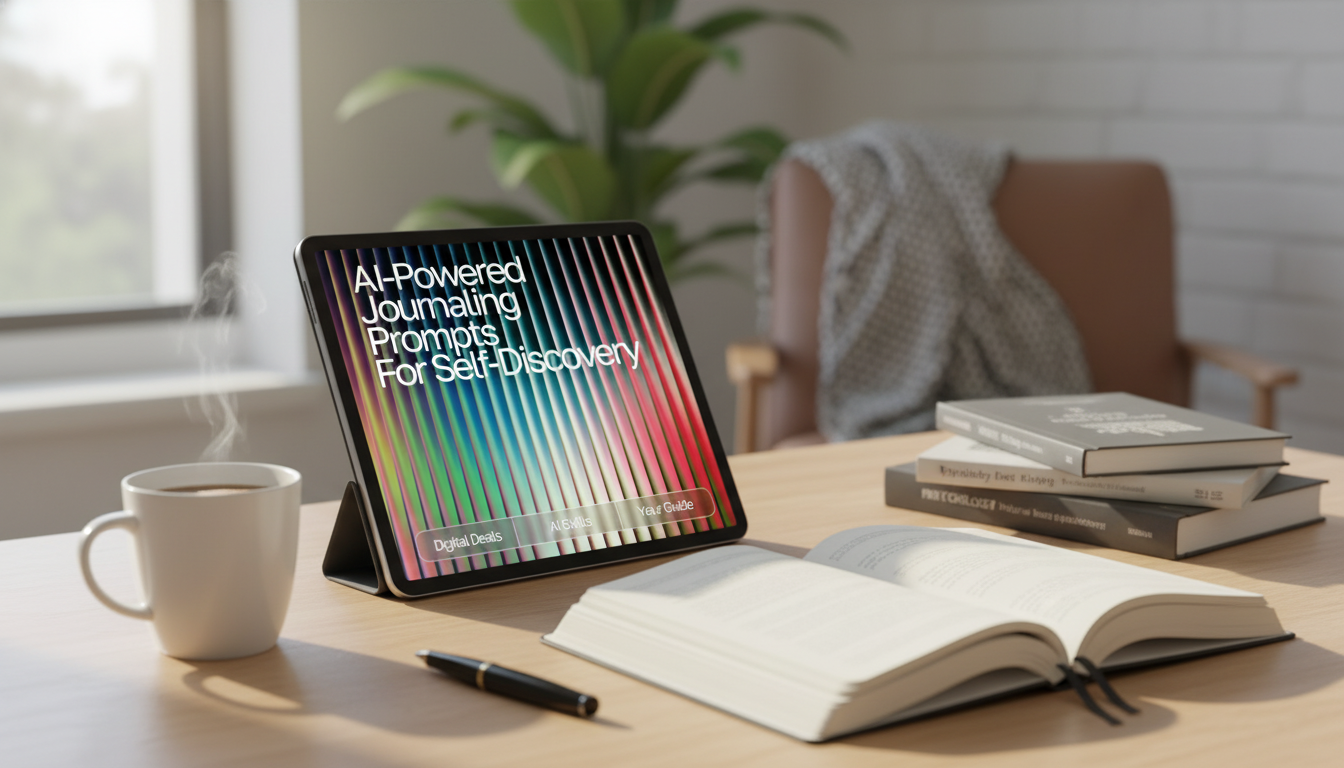
A Smarter Way to Journal for Self-Discovery and Personal Growth
Journaling can be simple, but it becomes powerful when the right questions meet the right moment. A guided, AI-assisted workbook makes reflection more structured, helping uncover patterns, clarify values, and turn insights into small, repeatable actions—without needing to start from a blank page. Instead of “Dear diary” and a stalled cursor, you get a steady sequence of prompts that keep you moving from what happened to what it means and what to do next.
Why guided reflection works when motivation is low
On the days when energy is limited, structure matters more than inspiration. Guided reflection reduces friction so it’s easier to show up consistently—even if you only have a few minutes.
- Reduces the pressure of “what should I write about?” by offering clear starting points.
- Helps move beyond surface-level updates into emotions, beliefs, needs, and choices.
- Encourages consistency through short, repeatable sessions (5–15 minutes).
- Supports self-awareness by revisiting themes over time: triggers, strengths, values, and boundaries.
Over time, those short sessions add up. You begin to notice what reliably drains you, what restores you, and which situations nudge you into people-pleasing, avoidance, or self-criticism—often before they snowball.
What AI-assisted journaling adds to a traditional workbook
Traditional prompts can be helpful, but they’re often “one-and-done.” AI-assisted reflection is designed to respond to what you write so the next question naturally follows the last answer.
- Adaptive question flow: follow-up questions can deepen reflection instead of stopping at one answer.
- Pattern-spotting mindset: encourages noticing trends (recurring worries, energizing activities, avoidance loops).
- Balanced framing: helps rephrase harsh self-talk into more accurate, compassionate language.
- Goal alignment: connects daily experiences back to longer-term priorities and personal values.
Traditional journaling vs guided AI-assisted reflection
| Approach | Best for | Common obstacle | Helpful support |
|---|---|---|---|
| Free writing | Emotional release, creativity | Rambles or stalls | Gentle structure and next-step questions |
| Standard prompts | Consistency and variety | Prompts may not fit the moment | Adaptable follow-ups based on your answer |
| Therapy-style worksheets | Specific skills (CBT/ACT-style thinking) | Feels clinical or time-consuming | Short sessions with plain-language guidance |
| AI-assisted workbook | Self-discovery, clarity, mindset shifts | Overthinking or perfectionism | Step-by-step questioning plus action-focused summaries |
For readers who like evidence-informed tools, expressive writing and structured reflection are often linked with stress relief and improved emotional processing. The American Psychological Association summarizes several benefits and best practices for “healthy journaling,” while early research by Pennebaker and Beall helped popularize the idea that writing about difficult experiences can reduce the burden of inhibition (APA overview; Pennebaker & Beall, 1986).
What’s included in the guided eBook and printable workbook
A well-designed workbook is less about “writing more” and more about writing with direction. The goal is to help you connect the dots between what you feel, what you think, what you do, and what you actually need.
- A structured set of reflection exercises designed for self-awareness and personal growth.
- Mindset-focused writing sessions that connect emotions, thoughts, behaviors, and needs.
- Print-friendly pages for offline writing plus a digital format for copy/paste journaling.
- Instant access suitable for daily use, weekly reviews, or a 30-day reset.
If you want a ready-to-use option, the AI-Powered Journaling Prompts for Self-Discovery (Instant Download) is built for quick starts: choose a theme, answer a short sequence, and end with a clear next step.
A simple routine to turn insight into change
Insight feels good, but change happens when insight becomes a small, repeatable behavior. A routine prevents your entries from becoming “interesting thoughts” that never leave the page.
- Daily (5–10 min): choose one short reflection and end with a single doable action.
- Weekly (15–20 min): review entries for repeated triggers, energy drains, and wins.
- Monthly (30 min): identify 1–2 themes to focus on (boundaries, confidence, stress, relationships).
- Close each session with a “next time” note: what to try, avoid, or ask yourself again.
Use cases: matching reflection to the moment
When you want additional structure for thought patterns, CBT-style self-help techniques can pair well with journaling—especially for identifying automatic thoughts and testing alternatives (NHS CBT techniques).
Keeping it safe, private, and emotionally supportive
Support can also be practical, not just emotional. For some households, a gentle check-in routine is easier with a dedicated companion device. If that fits your space, the Smart AI Interactive Emotional Robot Companion for Kids and Adults can be used as a simple reminder tool for daily reflection and calming habits (especially when routines are hard to maintain alone).
Choosing digital, printable, or a hybrid setup
Who it’s for (and when to pause)
Get started with the guided workbook
For instant access, start with AI-Powered Journaling Prompts for Self-Discovery (Instant Download) and keep the first week intentionally small: one honest answer, one clarifying follow-up, one doable action.
FAQ
How is an AI-assisted journaling workbook different from regular journaling?
It provides structure and tailored follow-up questions, so you’re not stuck deciding what to write next. It also emphasizes spotting patterns over time and ending sessions with a small action step rather than stopping at reflection.
Can this be used as a printable workbook and digitally?
Yes—print pages for distraction-free writing, or type directly for speed and easy searching. A hybrid approach works well: daily handwritten pages and a weekly digital recap to track themes.
Is journaling helpful for stress and mental health?
Journaling is often associated with stress reduction and emotional processing, especially when it helps organize thoughts and name feelings. It can be a helpful self-care tool, but it isn’t a substitute for professional support when symptoms are severe or persistent.
Recommended for you


Was this article helpful?
Yes
No









Leave a comment