-
Shop
- Advanced Technologies
- AI Skills Mastery 2026 Collection
- Apple Accessories
- Arts, Crafts & Hobbies
- Best-Sellers
- Calvin Klein
- Car Accessories
- Christmas Collection
- Dating & Social Skills
- Denim
- 7FOR
- AGOLDE
- Antony Morato
- Armani Exchange
- Boss
- Brunello Cucinelli
- Calvin Klein Jeans
- Costume National
- Desigual
- Diesel
- Dolce & Gabbana
- Dsquared²
- Ermanno Scervino
- Fendi
- Gianni Lupo
- Guess Jeans
- Ichi
- Just Cavalli
- Lee
- Levi's
- Liu Jo
- Morgan De Toi
- Mother Denim
- Only
- Pepe Jeans
- Pinko
- Replay
- Tommy Hilfiger Jeans
- Valentino
- Vero Moda
- Digital Resources
- Car Buying & Ownership
- Cozy Feast Collection
- Emotional Intelligence
- Financial Education
- Home Styling & Organization
- Mindfulness
- Mindset
- Parenting & Child Development
- Pet Lifestyle & Wellness
- Positive Thinking
- Productivity
- Self Confidence
- Sleep Improvement
- Stress Management & Relaxation
- Travel Planning
- Yoga & Fitness
- Yoga & Mind-Body Practices
- Education & Learning
- Family & Parenting
- Fashion
- Accessories
- Alexander McQueen
- Bags
- Bags & Wallets
- Balenciaga
- Belts
- Blazers
- Blouses & Shirts
- Bottega Veneta
- Bottoms
- Brunello Cucinelli
- Burberry
- Chanel
- Chloé
- Dior
- Dolce & Gabbana
- Dresses
- Etro
- Gucci
- Hats & Hair Accessories
- Hoodies & Sweatshirts
- Jacquemus
- Jewelry
- Jil Sander
- Jimmy Choo
- Kiton
- Luggage
- Luggage Bags
- Men's Fashion
- Miu Miu
- Off-White
- Outerwear
- Prada
- Rick Owens
- Saint Laurent
- Skirts
- Socks & Tights
- Sunglasses
- Sweaters & Cardigans
- The Row
- Tom Ford
- Tops & Shirts
- Valentino Garavani
- Versace
- Vivienne Westwood
- Watches
- Fashion Accessories
- Furniture
- Gadgets
- Health & Beauty
- Health & Wellness
- Home & Garden
- Home Supplies
- Kids & Babies
- Lighting
- Patio, Lawn & Garden
- Personal Growth
- Pet Care
- Pet Supplies
- Pets
- Shoes
- Sport & Outdoors
- Super Deals
- Thanksgiving Digital Collection
- AI & Tech-Enhanced Thanksgiving
- Budgeting & Smart Shopping
- Eco-Friendly & Sustainable Thanksgiving
- Family & Kids
- Gift Ideas Guides
- Gratitude & Mindfulness
- History & Meaning
- Hosting & Planning
- Leftovers & Storage
- Pets & Thanksgiving
- Social Media Captions & Ideas
- Thanksgiving DIY Ideas
- Thanksgiving Recipes
- Thanksgiving Products
- Travel
- Wealth
- Wealth Building
- Budgeting & Saving
- Cryptocurrency Investing
- Debt Management
- Entrepreneurship & Business Growth
- Family Finance & Budgeting
- Financial Independence
- Financial Mindset & Psychology
- Financial Planning
- Frugal Living & Expense Hacks
- Goal Setting
- High-Income Skills
- Investing Basics
- Leadership
- Motivation
- Networking & Mentorship
- Passive Income Strategies
- Real Estate Investing
- Side Hustles
- Stock Market Investing
- YouTube Shorts Best-Sellers
Best Large Cat Tree: Big Condos, Hammocks & Perch
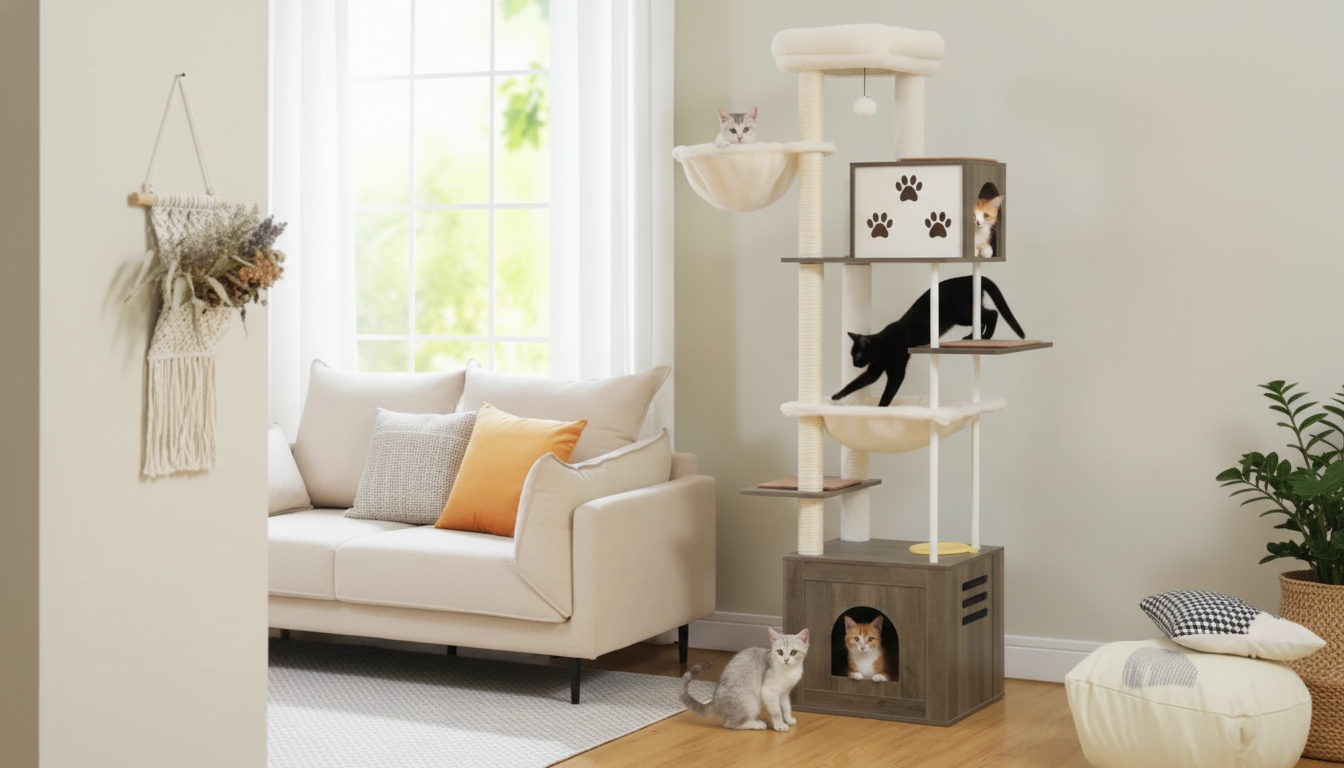
A well-designed cat tree can turn one corner of a room into a full vertical territory: a place to nap, hide, climb, and watch the household from above. This guide breaks down what matters most in a multi-level tower with roomy condos, hammock lounges, and an elevated perch—plus practical tips for choosing placement, keeping it stable, and making it appealing to everyday cats and heavier, lazier loungers alike.
What a multi-zone cat tree adds to a home
A tall, multi-level cat tree gives cats “separate rooms” without taking over your floor plan. In multi-cat homes, that vertical territory can reduce competition by offering distinct rest zones—one cat can claim a condo while another relaxes on a hammock or watches from the top perch.
Beyond convenience, these towers support natural behaviors: climbing for exercise, scratching to maintain claws and mark territory, hiding for security, and observing from a safe height. A good layout blends open lounging (perch) with enclosed privacy (condos) and flexible nap zones (hammocks). When scratch posts sit along natural travel routes between levels, cats are more likely to use them instead of the couch.
For background on why vertical space and variety matter, see enrichment guidance from International Cat Care (iCatCare) and the ASPCA’s cat care resources.
Key components: extra-large condos, hammocks, and an elevated perch
Extra-large condos
Roomy condos are especially valuable for large breeds, hefty adults, or cats that sleep “all-in” with paws tucked and tail wrapped. Look for wide openings and enough interior height for an adult cat to turn around comfortably. If two bonded cats like to curl up together, a larger condo helps prevent crowding and crankiness.
Hammocks
Sling-style hammocks cradle the body and often become the most-used nap spot on the tower. Prioritize reinforced attachment points and fabric that’s easy to spot-clean. Wider, well-supported hammocks feel more secure for heavier cats and reduce the “tippy swing” sensation that some cats dislike at first.
Top perch
The elevated perch is your cat’s lookout—many cats treat it like a confidence booster and a daily observation post. A raised edge or lip helps cats settle in without feeling like they might slide off, especially when they shift positions mid-nap.
Scratch posts
Scratch posts work best when they’re part of the climbing route, not hidden off to the side. Thicker posts tend to wobble less and last longer, and they’re easier for a cat to hug and stretch against while scratching.
Stability and safety checks before buying
For tall structures, stability is non-negotiable. Start with the base footprint: a wider base resists tipping, and it should scale appropriately with the overall height of the tree—especially if you have energetic jumpers.
- Weight capacity: Plan for the heaviest cat plus dynamic movement (leaping into hammocks and pushing off from perches).
- Anti-tip options: Wall anchor points add peace of mind for tall towers or active multi-cat households.
- Platform traction: Soft covering is cozy, but avoid slick surfaces on high levels so landings feel secure.
- Clearances: Leave enough open space for clean jumps up and down without bumping shelves, window sills, lamps, or furniture corners.
Sizing and placement for real-life use
Placement often determines whether a cat tree becomes a daily destination or a dust-collecting tower. If possible, position it near a window so the perch has a view—birdwatching and neighborhood “patrol” time can dramatically increase use. Just make sure it doesn’t block curtains or tangle blinds.
Materials, comfort, and cleaning considerations
Feature checklist: what to look for at a glance
| Feature | Why it matters | Good sign | Watch out for |
|---|---|---|---|
| Extra-large condos | Privacy and stress reduction; better for larger cats | Wide entrance and roomy interior | Small openings; cramped interior height |
| Reinforced hammocks | Comfortable cradle naps; frequent daily use | Sturdy attachment points; thick fabric | Loose stitching; thin sling fabric |
| High perch with edge | Confident lookout spot; encourages climbing | Raised rim or bolsters | Flat, slippery platform |
| Thick scratch posts | Less wobble; longer life | Wide-diameter posts and tight sisal wrap | Thin posts that sway under load |
| Wide base / anchoring | Safety for tall structures and jumpers | Wide footprint and anchor option | Tall tower with narrow base |
Who this style suits best
Recommended picks (in stock)
- Large Cat Tree with Extra Large Condos, Hammocks, and Perch — a multi-zone tower designed for lounging variety: covered condos for privacy, hammocks for cradle naps, and a higher perch for daily lookout time.
- Mini HD 720P WiFi Camera — a simple way to check whether cats are using the condos and hammocks during the day, or to spot which level gets the most traffic.
Setup tips to encourage immediate use
Common issues and quick fixes
FAQ
Will the hammocks hold a large adult cat?
Check the listed weight limit, and look for reinforced attachment points and a stable base so the tower doesn’t shift when your cat jumps in. Wider hammocks with secure mounting tend to feel safer and hold up better for heavier cats and enthusiastic leapers.
Where should a cat tree go for the most daily use?
Place it near a window or in a main living area where your cat already likes to spend time, while avoiding loud appliances and busy doorways. Aligning it with existing cat routes and leaving clear jump space can make it an instant favorite.
How often should a cat tree be tightened and cleaned?
Tighten bolts after the first week of use and then periodically (often monthly) to reduce wobble. Vacuum weekly to manage fur, and spot-clean with pet-safe cleaners, letting surfaces dry fully before your cat uses them again.
Recommended for you


Was this article helpful?
Yes
No








Leave a comment